

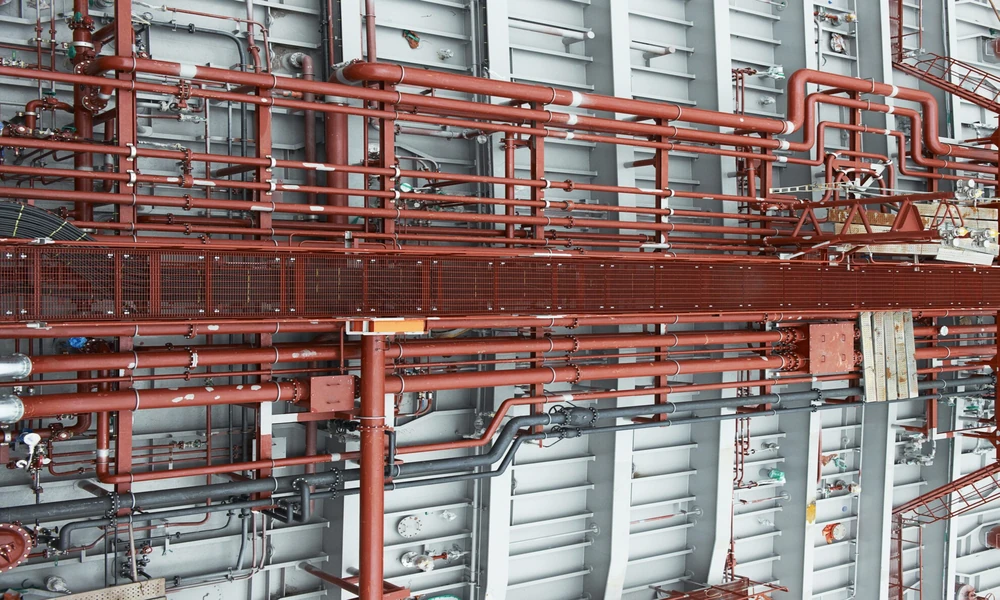
Ever wonder why a building project suddenly stalls right when it should be cruising toward completion? Well, nine out of ten times, the actual culprit hides inside the mechanical, electrical, and plumbing systems; the structure has very little to do with it.
Design coordination errors contribute up to 52% of all construction rework, according to the Construction Industry Institute. This single figure explains the reason why building owners are now vetting a top MEP engineering services provider in the USA well before ground is broken.
Coordination Errors Cost More Than Anyone Admits
Rework isn’t just frustrating; it’s genuinely expensive. A study by the McKinsey Global Institute estimates that rework constitutes 5-15% of overall construction costs on a typical project.
Every single unfixed clash between ductwork, piping, and structure can add around $1,500 in on-site costs, and collectively these clashes may account for approximately 30% of a project’s budget. Multiply this across a mid-rise commercial build, and the math gets uncomfortable very quickly, particularly after change orders and idle crews enter the picture. This is precisely the gap a superior MEP engineering business is built to close, spotting conflicts digitally before site crews ever touch a wrench, when a resolution still costs hours rather than weeks.
What Separates a Truly Genuine MEP Engineering Firm
Not every firm treats coordination the same way. Industry research reveals that BIM-driven coordination curtails construction rework by 40-60% on complex projects, yielding an average ROI of $8.50 for every $1 invested.
This level of return doesn’t just happen by accident. It comes from federated modeling in Autodesk Revit and Navisworks, engineers who understand all types of clashes equally well, and disciplined clash-detection cycles. An experienced, top MEP engineering services provider deals with these cycles as a routine discipline, not a late-stage scramble before permitting, and documents each addressed conflict for the project record.
Where HVAC Design Services Deliver Quantifiable Value
Many think that mechanical systems are just about comfort, but they overlook that they are the largest energy line item in most commercial infrastructure. It is key to consider the scale involved:
- Heating, cooling, and ventilation account for roughly 44% of on-site energy usage in commercial buildings
- Space heating itself represents around 32% of total commercial building energy consumption, with ventilation adding an extra 10%
- Close to 82% of the USA’s commercial floor space is heated, and 61% is cooled
These numbers signify why accurate HVAC design solutions are not optional add-ons. Undersized equipment strains budgets for decades, while oversized equipment wastes capital at the outset and never runs efficiently. Getting duct routing, load calculations, and equipment selection right the first time safeguards both operating expenses and occupant comfort for the building’s life, long after the inauguration.
Selecting the Right Partner Countrywide
Contractors and owners throughout the nation are learning that geography must not limit access to sound engineering. A business operating as the top MEP engineering services provider in the USA generally supports projects remotely, plugging directly into a design team’s prevailing Revit and Navisworks workflows. That translates into faster coordination cycles irrespective of time zone, minimal RFIs during construction, and documentation that holds up under permitting review.
At the time of assessing any MEP engineering firm, ask how they tackle federated modeling, how often they execute clash detection, and whether their HVAC design services comprise comprehensive load calculations, not just duct layouts.
The Bottom Line for Project Teams
Coordination failures are preventable, and the data clearly back this claim. Naturally, firms that invest in disciplined BIM workflows perennially outperform those relying on manual checks, and the gap only increases as project complexity grows.
For any building owner comparing options, looking for the top MEP engineering services provider in the USA must begin with one question: how do they prevent issues before they happen, not just how quickly they respond after something goes wrong on site.
