

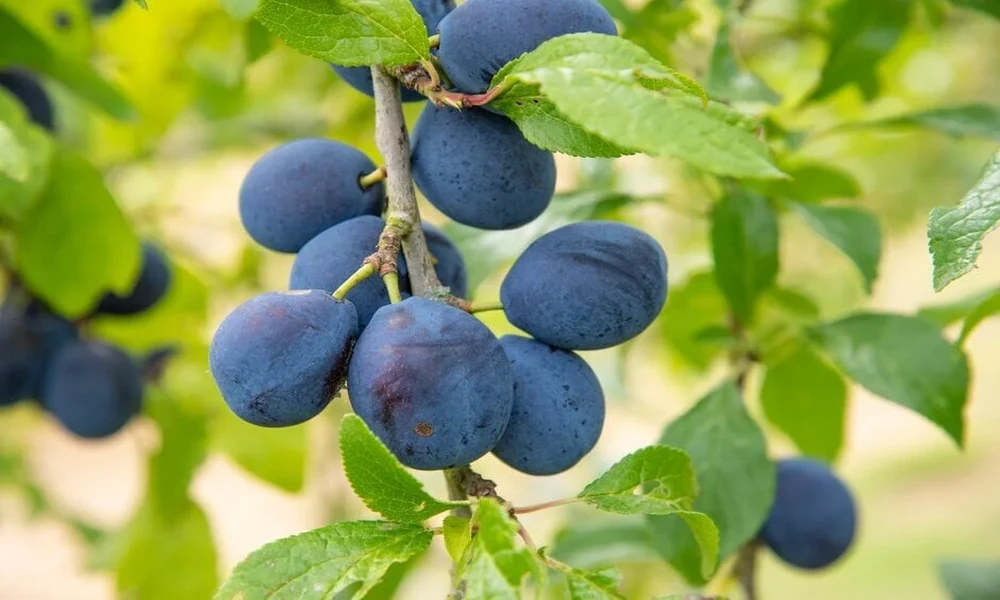
A bowl of damsons and a bowl of ripe greengages invite different plans. One suggests a pan on the hob, jars lined up nearby and a decision about how much fruit to preserve. The other may disappear before any cooking begins. For a British gardener buying a tree, those uses deserve a place near the start of the conversation.
Damsons and gages belong to the plum family, but the names cover more than one kind of harvest. Merryweather is sold for eating as well as cooking, while a small traditional damson may appeal chiefly for preserving. Green is not the only colour in the gage cupboard either: golden gages broaden the choice. The useful supplier makes those distinctions visible and offers a tree that the garden can accommodate.
What earns a place in this selection
The eight suppliers below were compared through their damson and gage listings, with particular attention to named cultivars, forms and rootstocks. CRJ Fruit Trees opens the list because its separate ranges make it possible to start with the intended fruit use. Subsequent positions move through damson selection, orchard trees, bare-root gages, a substantial Merryweather option, trained gages and smaller-scale purchases.
This is an editorial ordering of published offers. It does not report tasted fruit or measured yields. Nursery descriptions of sweetness and culinary use are attributed where they inform a choice. Old Greengage and Cambridge Gage retain the green-fruited emphasis, while named golden gages provide additional choices within the same nursery selections. Each seller is a British nursery or retailer; delivery arrangements remain specific to the order.
Best 8 Damson and Greengage Tree Suppliers for UK Gardens
1. CRJ Fruit Trees
For UK gardeners deciding between a preserving damson and a dessert gage, CRJ Fruit Trees offers a useful place to buy fruit trees: it separates its damson choices from its greengage range. Farleigh, Merryweather and Shropshire appear on the damson side; Early Transparent, Old Fashioned, Dennistons Superb and Oullins Golden appear among the gages.
That separation gives a household room to think about the harvest before becoming absorbed in tree sizes. Someone who makes damson jam most autumns can stay within the damson selection. Someone hoping to eat soft, ripe fruit straight from the garden can explore the gages. A household wanting both can compare two genuinely different crops within the same order.
Merryweather is an especially useful point of comparison across this list because other suppliers offer it in specific forms. Once that cultivar has been chosen, the next question becomes the tree itself: rootstock, supplied branching and eventual growing space.
There is room in these two ranges for quite different harvest plans. Farleigh and Shropshire keep the conversation among damsons; the gage names open another cupboard of possibilities. Begin with the fruit the household will welcome, then settle its growing requirements.
2. Walcot Organic Nursery
For the preserving cupboard, Walcot offers a concentrated damson comparison. Its range includes Farleigh, Merryweather, Shropshire Prune and Sweet Damson as maiden trees on St Julien A. Keeping the rootstock and starting stage broadly comparable makes the differences between cultivars easier to investigate.
A maiden is young nursery material. It gives the gardener the chance to build the crown over time, which can suit a new productive garden where several trees are being established together. There is less reason to pay for a finished shape if the planting is still at the stage of grass removal, supports and paths.
The Worcestershire nursery’s seasonal bare-root system also fits the rhythm of an orchard project: reserve a named tree, prepare the ground, then plant during suitable dormant-season conditions. Its current dispatch window runs from early December into March, subject to the season. That is a different purchase from a potted tree intended for immediate arrival.
Four named damsons on St Julien A give a preserving garden several possible starting points. A single-tree planting can concentrate on which crop will be most welcome; a larger planting can investigate differences between the four while retaining a comparable young-tree format.
3. Landford Trees
Landford’s fruit range places Merryweather and Shropshire Prune beside Greengage and Oullins Golden Gage, all within its St Julien A plum-family selection. The Wiltshire nursery is therefore relevant to a gardener planning trees in open ground and comparing both sorts of fruit on a stated rootstock.
Its broader tree business becomes useful when the fruit planting is part of a larger garden plan. Access, the scale of the delivered tree and the route to the planting area deserve discussion alongside the cultivar. Landford describes a delivery operation focused on the south of the country, including larger specimens, so a quotation can settle matters that a simple basket price leaves open.
A damson placed along the edge of a productive garden and a gage given a sunny picking position need not arrive in identical forms. The nursery lists selected fan-trained plum-family trees as well, although the particular cultivar and dimensions need to be established in the quotation. This is a route for fitting named fruit trees into a planting scheme, with a clear geographic emphasis to the supply service.
4. Ashridge Nurseries
Old Greengage, Cambridge Gage and Oullins Golden give Ashridge’s bare-root selection a useful gage emphasis. Merryweather supplies the damson counterpart. The choice is appealing when the main ambition is ripe dessert fruit but there is still room in the plan for preserving.
Old Greengage and Cambridge Gage can stay on a dessert-fruit shortlist while Oullins Golden introduces golden fruit. Keep those names attached to the planting plan. They provide the starting information for a pollination enquiry and make it possible to return to a particular choice after comparing several catalogues.
Ashridge’s mail-order model suits a winter planting assembled in advance. Collection is by arrangement at its Somerset site, with a stated Friday collection window, rather than an assumption that the nursery can be visited for browsing whenever convenient. That can matter when a gardener would rather collect several trees than organise a delivery.
Choose the gage while planning next year’s kitchen garden, and organise its dormant-season arrival around the prepared ground. Ashridge’s named bare-root options keep that sequence straightforward, with Merryweather still available to investigate if a damson would make better use of the space.
5. Adam’s Apples
Merryweather earns its space here on its own merits. Adam’s Apples offers it as a two-year tree on St Julien A and describes the fruit as suitable for fresh use, cooking, jam and damson cheese. That range of uses can appeal to a household with space for one damson and several ways of using it.
Damson cheese is a firm fruit preserve; it is not a dairy product. A batch can become a firm preserve served in slices, giving Merryweather another purpose beyond a jar of jam. The nursery’s suggested uses connect the named damson to a recognisable kitchen plan.
The Devon nursery’s winter offer also includes gages such as Dennistons Superb, Oullins Golden and Reine Claude Verte. Merryweather can therefore be the centre of the order without being the only relevant choice. Its two-year specification is particularly helpful for comparison with the younger maiden trees elsewhere in this selection.
The order belongs to the nursery’s seasonal supply, with advance ordering for winter dispatch. A two-year tree offers a different starting stage; it does not establish a guaranteed year for the first worthwhile pan of fruit.
6. R.V. Roger
A sunny wall can bring a trained gage into the kitchen-garden plan. R.V. Roger lists Golden Transparent in several forms, including a traditional fan with five to seven shoots on St Julien A. Maiden, bush and half-standard options are also specified, with rootstocks varying between them.
This is a golden gage, clearly identified as such. Roger describes firm, golden-yellow dessert fruit. For a reader who started with the word greengage but is open to the wider gage group, that offer connects an eating-fruit choice with a prepared wall form.
The fan matters because some early shaping has already taken place in the nursery. It can be compared with a maiden bought for training at home, allowing the gardener to decide how much of that work to purchase. A tree with prepared branches still needs suitable support, tying and ongoing pruning after planting.
Roger’s North Yorkshire nursery supplies these trees through the bare-root season. The exact form belongs in the enquiry, especially where the order involves a trained tree whose width affects carriage and access. It is a distinctive option for a gage planting with a defined framework to fill.
7. Victoriana Nursery Gardens
Oullins Gage is offered by Victoriana as a container-grown tree on St Julien A, with the listed height including the pot. The nursery describes golden-yellow fruit for eating, bottling and freezing. Dessert fruit can be enjoyed ripe, with surplus directed towards the freezer or bottling pan.
The pot is the purchasing difference. It provides a route outside the normal bare-root delivery rhythm, subject to the selected plant being available. A container tree can be convenient when a suitable planting space becomes ready during the growing season, although watering and planting conditions still deserve care.
Victoriana’s offer is narrower than the multi-cultivar gage ranges above. That can be welcome once Oullins has already been chosen: attention can move to the nursery plant, the delivery and the place where it will grow. The supplied height is a handling measurement, not a promise that the mature crown will remain at that level.
8. Pomona Fruits
Pomona brings the damson closer to the path with cordon options. Farleigh and Merryweather appear as cordons on St Julien A, including two-year container plants as well as seasonal bare-root listings. This creates a different shape of purchase from the free-standing maiden or bush tree.
A cordon directs growth into a narrow supported framework and requires regular training. These St Julien A damsons need especially careful planning: RHS guidance describes plum cordons as more demanding than apple or pear cordons and favours less vigorous varieties on smaller-growing stocks. Discuss how the specific damson will be maintained before relying on a narrow outline.
Choosing Farleigh or Merryweather in this form can preserve a damson place in a garden where a spreading crown would be awkward. Pomona’s description of the actual container size and supplied height also helps with the immediate practicalities of moving the tree into position.
This final option is deliberately specific. The choice is a damson grown in a managed form, with the future pruning work understood at the point of purchase.
Bring the choice back to the harvest
Before ordering, picture a useful amount of fruit arriving together. Would it be eaten fresh, frozen for later batches, bottled or made into a preserve? The answer can distinguish a desired crop from a tree that merely sounds appealing in a catalogue.
Then settle the growing arrangement: an open-ground crown, a supported fan or a maintained cordon. Plums, damsons and gages need pruning at suitable times in spring or summer, rather than being treated like winter-pruned apple trees. Pollination requirements belong to the named cultivar, so two trees should not be assumed compatible simply because both appear in the plum section.
The final order should name the fruit, rootstock and form. Those details connect the kitchen ambition to the tree that will actually occupy the garden, and make a future supplier conversation much more productive.
Source note: Official nursery and retailer damson, gage and trained-tree listings informed the supplier comparison. The horticultural context draws on RHS advice for the plum family, including the limits of cordon training.
