

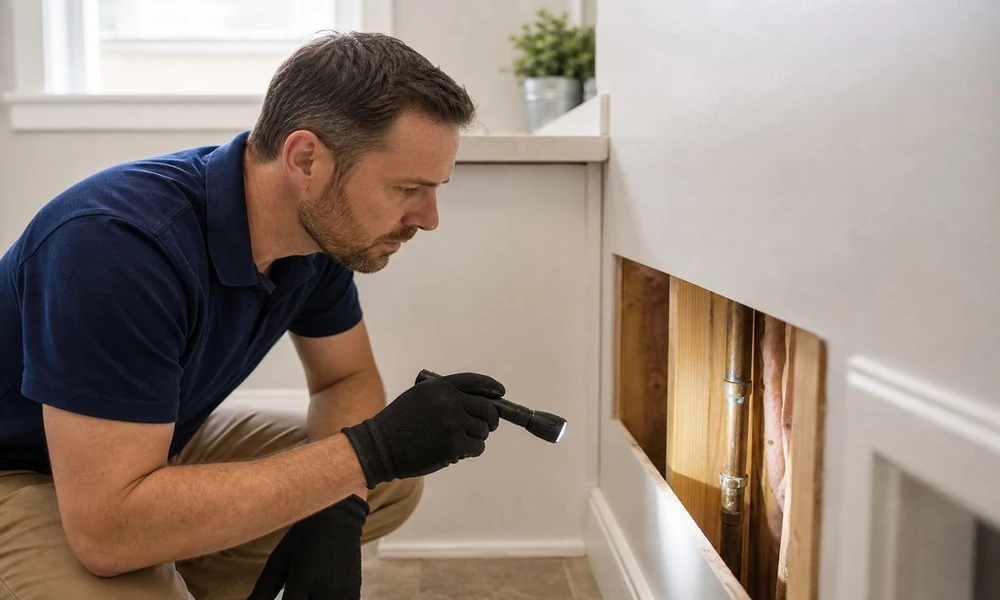
Water can still pool under bedroom carpeting even though a vacant unit looks dry from the hall. The upstairs bathroom supply line could have leaked for several hours before being discovered, soaking through the ceiling below, dripping onto a bare bed frame, and marking a brown line behind a partially opened closet door.
Before any repairs or painting, before anyone walks through to show the unit, the landlord or property manager needs to take stock of what he sees.
Damage Documentation
Before moving furniture or tearing out flooring, the landlord or property manager (click here) needs to make a clear record of what he finds. He should photograph the shutoff valve, the broken section of pipe, the puddle by the toilet, the stained ceiling, and each affected room. He should take wide-angle shots and close-ups, and a picture of the bowed baseboard outside the bedroom door is more helpful if it shows which room it belongs to.
He should write down his observations while they are still fresh in his mind:
- When he noticed the leak and when he turned off the water
- Which rooms were affected, including bedrooms, closets, and hallways
- What materials were affected, including laminate flooring, carpet padding, drywall, insulation, and painted trim
- Other existing damage, such as a coffee stain on the desk or a chipped edge of the vanity, that is not related to the loss
- Initial moisture measurements on the walls, ceiling, and floor
The record is essential to distinguish the damage caused by the burst pipe from the usual wear and tear between occupants. It also gives the insurance company and the repair contractor a common reference point, rather than letting them try to figure out the condition of a yellowed ceiling three days after the incident.
A rupture in a cold-water supply line is normally a cleaner scenario than flooding caused by a clogged toilet or backed-up drain. Water from a broken supply line in the upstairs bathroom may start out as clean, but as it passes through the dirty carpet and padding, the insulation and hollow space of the cabinets, and the void above the downstairs ceiling, it becomes contaminated.
It’s not time to set the showing yet.
If water comes from a clogged drain or overflowing toilet, the landlord or property manager must be more careful with carpets, porous insulation, and absorbent items. A soaking wet bath mat, a box stored in a linen closet, and the underside of the particleboard vanity can all be contaminated. Placing an area rug over the stained carpet for the showing might cover up the damage for a day or two, then leave mold (https://www.epa.gov/mold/brief-guide-mold-moisture-and-your-home) and far bigger problems waiting behind the bedroom door.
Materials and Removal
Some materials can be dried in place when water contact is brief, and drying begins soon after the leak is stopped. Unpainted wooden trim may be salvageable if it has not swollen or fallen apart at the joints. Drywall can sometimes be saved if moisture readings are decreasing and the surface is not softening around the electrical outlets or bubbling in the paint.
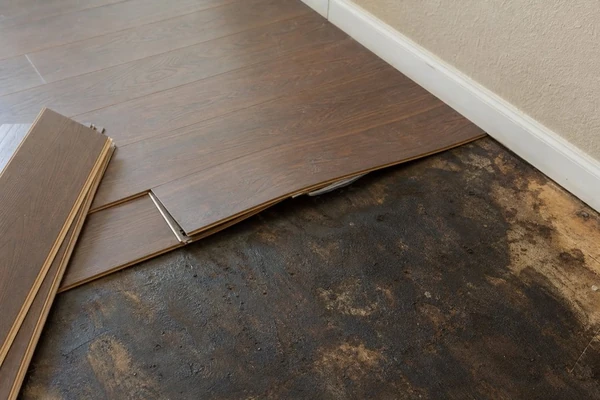
Laminate flooring is not as forgiving. As soon as water gets past the seal, the planks will swell at the edges, lift away from the wall, or hold moisture below. Removing one piece near the doorway to the closet can show whether the padding is wet and whether the subfloor has darkened; the practical side of burst pipe cleanup starts there.
Ceilings that share a wall with the bathroom also require a careful examination. If the ceiling under the bathroom feels soft or sags near a light fixture or around the exhaust fan, removing a section of the ceiling might be a wiser choice than waiting for it to crumble. The insulation in the ceiling cavity can continue to hold water long after the leak has stopped.
Drying and Repairs
The plumber can find the source of the leak and determine whether it was caused by freezing, corrosion, or a loose joint. The mitigation company should log their pump-out operation, where they set up the fans and dehumidifiers and how moisture levels are changing. Just because a fan is aimed at the wet spot on the ceiling doesn’t mean the area above it is dry.
The landlord or property manager should provide the insurance company with the pictures from his visit, the plumber’s report, and an inventory of materials that were removed. If there is a potential tenant waiting for the unit, the landlord or property manager must give her an honest update on the revised move-in date. Fresh paint can peel in the next few weeks over a still-wet wall, particularly where the carpet was pulled back and the tack strip is still damp.
Repairmen shouldn’t return to the unit until they see the data that proves the materials are completely dry. They should be able to verify that the carpet padding, laminate flooring, insulation, and drywall have been disposed of and are not still piled up in the garage next to the water heater.
Before repainting, the repairman or the painter should receive the moisture readings for the downstairs bedroom wall, the ceiling under the bathroom, and the exposed subfloor near the closet entrance.
