

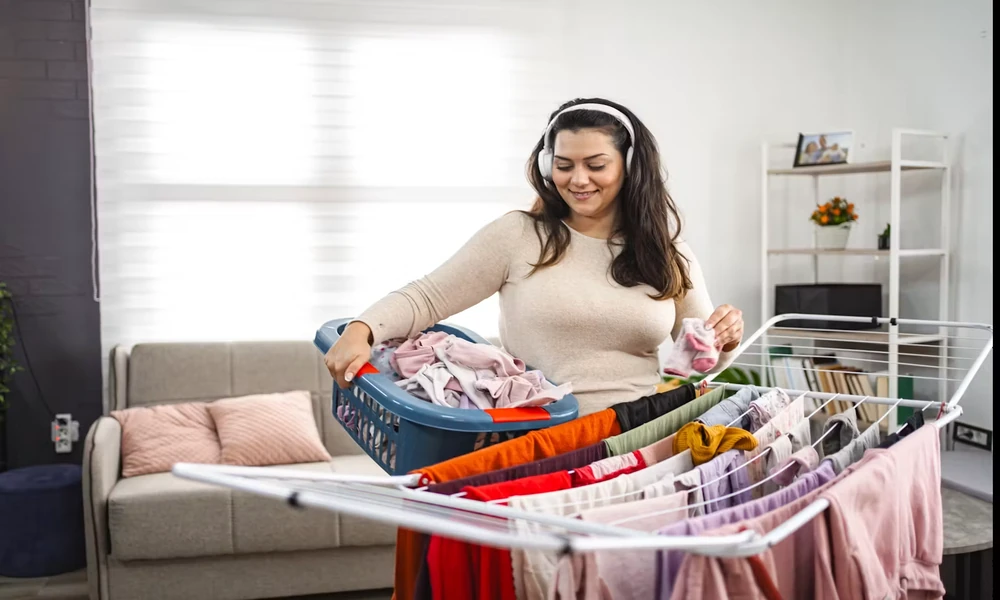
If a room has become damp after the household starts drying more laundry indoors, that change belongs in the equipment conversation. A dehumidifier may have a useful role, but choosing one without describing the recurring activity leaves out part of the problem. Discuss both the room and the routine that will continue inside it.
A Markham household may add a drying rack because a garment needs special care, outdoor space is unavailable or laundry demands have increased. None of those choices is unusual. The practical challenge arises when an occasional arrangement becomes the normal use of a bedroom, basement or spare room without anyone reconsidering how that space handles moisture.
Start with the laundry that actually happens
Describe an ordinary week rather than an ideal one. Which items are dried indoors, in which room and how often? Does one load finish before another arrives? The purpose is not to calculate a moisture load from memory, but to give a qualified adviser a realistic account of the activity connected with the concern.
Include the reason for the arrangement. A family may have a high volume of sports clothing, limited access to a shared laundry or garments whose care labels rule out a familiar drying method. Advice that ignores those constraints may be impossible to sustain. A useful discussion begins with what the household can actually change.
Health Canada’s moisture guidance identifies laundry and other indoor activities among possible sources of moisture problems and emphasizes controlling moisture at its source. That does not establish that a particular rack caused every mark in a room. It does mean the activity should be included when the room is assessed.
Describe the room’s other uses as well. A spare room may also hold stored books, function as an office or become a guest bedroom at weekends. Those uses affect where a rack can remain and what changes are realistic. A plan that works only while the room is empty may fall apart the first time somebody needs to use it normally.
Be honest about when the concern was noticed. If the rack has been present for months but a mark appeared after a plumbing incident, both facts matter. Do not settle on the laundry as the explanation simply because it is visible. Recurring dampness or other signs of a building problem still deserve appropriate investigation.
A rack and a vented appliance raise different questions
Separate garment-care decisions from appliance decisions. A label that permits one drying method for a garment does not provide instructions for managing the room. Conversely, a room recommendation should not lead the household to use a method the garment manufacturer rules out. Keep both sets of requirements in view when choosing a practical routine.
If a dryer is part of the situation, identify its type and follow its actual instructions. Do not assume every appliance handles moisture in the same way. Where the installation, venting or operation is uncertain, ask the manufacturer or an appropriate service professional. A portable dehumidifier should not become an improvised repair for an appliance problem.
Tell the adviser about any change in appliance use. Perhaps the household has begun using the rack more often because a machine is unavailable, or the laundry arrangement changed after a move. These details can explain why a temporary solution is being considered and whether the underlying circumstance has an expected end.
Keep the appliance area accessible for its intended use and service. A drying rack squeezed in front of controls or an access panel creates a second practical issue. Consider the actual movement required to load the appliance, handle laundry and leave the room. The most compact arrangement is not always the one the household can use comfortably.
Temporary control needs an honest account of the room
Before selecting rental equipment, explain whether the need follows a one-off event or accompanies an ongoing weekly routine. The distinction can affect what advice is appropriate. Hiring a machine for a defined temporary circumstance is a different decision from relying on repeated bookings while the room’s normal use remains unchanged.
People exploring temporary dehumidifier rental in Markham can bring that account to Drying Equipment. Confirm the actual unit’s suitability, operating requirements and rental arrangements. A local listing identifies an equipment option; it does not determine the correct response to every home with a drying rack.
Discuss where the equipment could be placed under its instructions without competing with hanging garments and ordinary access. Do not drape laundry over a unit or improvise a compact enclosure around it. If the permitted arrangement does not fit the available space, explain that constraint and seek another plan rather than forcing the machine into the layout.
Agree on how the temporary measure will be reviewed. A professional assessing the room may need observations about conditions and activity, while the rental provider needs information about the equipment itself. Keep the questions attached to the appropriate person. A changed display or faster-looking laundry should not automatically be treated as a complete assessment of the building.
A rental also needs a practical operator. The person responsible should receive the instructions, know the relevant contact and be available for the duties the arrangement requires. If everyone is away for long periods, say so. Do not select a plan that depends on supervision the household cannot provide.
Change the routine in ways the household can sustain
Once the cause and suitable response are understood, consider which laundry choices can realistically continue. That may involve a different schedule, an appropriately assessed location, appliance service or another arrangement compatible with garment care. Avoid adopting a plan that solves the room on paper but leaves the household unable to manage essential clothing.
Review the new routine after it has encountered a normal busy week. The useful question is whether it still works when several people need laundry at once, rather than only on the quiet day it was introduced. Bring persistent moisture concerns back to the appropriate adviser instead of treating them as a personal failure to keep the room orderly.
The best lasting arrangement is one the household can repeat without improvisation. Laundry gets done, the room remains suitable for its other uses and any temporary equipment has a clearly understood role. When that equipment leaves, the everyday activity that prompted the conversation should have an equally clear place in the home.
