

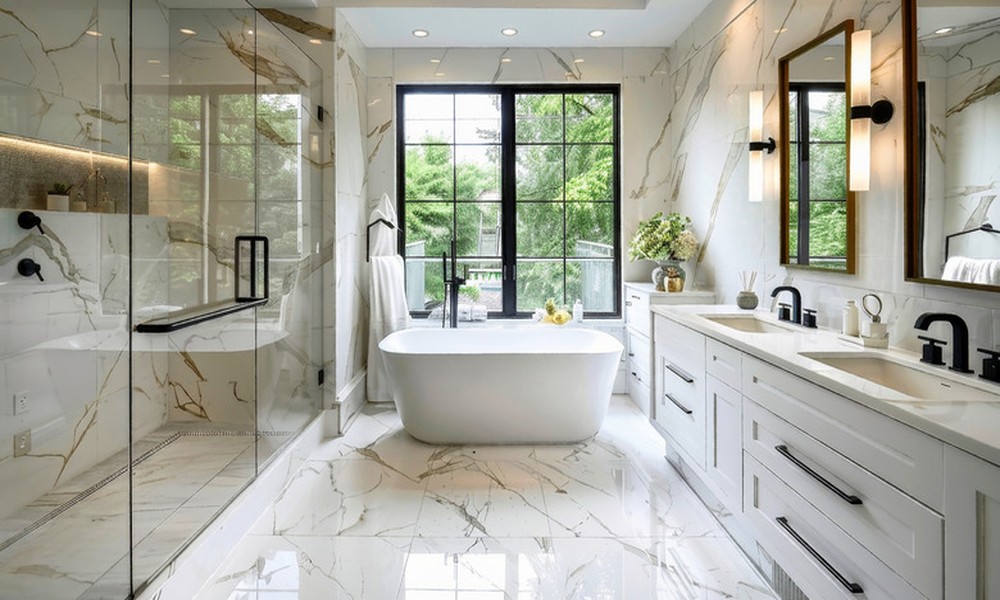
Most bathrooms in UK homes are smaller than ideal. Victorian terraces, post-war semis, even many newer builds prioritise bedroom count over bathroom size. Structural changes to increase floor space are expensive and often impossible without affecting other rooms. Yet small bathrooms don’t have to feel cramped.
Some changes can make small bathrooms feel much bigger without moving the walls. Knowing which changes really work helps you spend your limited budget on changes that make a big difference.
Replacing the Bath With a Walk-In Shower
Baths take up significant floor space and create visual bulk. A walk-in shower with minimal or no screen creates the impression of more space by removing that solid mass from the room. The floor continues uninterrupted, which makes the room read as larger than it actually is.
This works particularly well in bathrooms where the bath wasn’t being used regularly anyway. Many households default to showering over bathing. Converting to a dedicated shower recovers usable floor space whilst improving functionality.
For families with young children where baths are genuinely necessary, this trade-off doesn’t work. But for couples or single-person households, removing an unused bath for a walk-in shower often transforms how the room feels.
Large Format Tiles Versus Small Ones
Smaller tiles make more grout lines, which break up the surface and make rooms feel busier. Tiles that are 600x600mm or larger make surfaces look cleaner and less cluttered by reducing grout lines.
This is true for both walls and floors. A bathroom blog that focuses on trends for spring 2024 always talks about how large format tiles are a key part of modern bathroom design, both for looks and for how they change the space.
The practical advantage is that fewer grout lines also mean less maintenance. Grout in wet environments needs periodic cleaning and resealing. Fewer lines mean less work keeping the bathroom looking fresh.
Wall-Hung Toilets and Basins
Wall-mounted sanitaryware with concealed cisterns creates floor space that floor-standing alternatives don’t. The visible floor area increases, which makes the room feel less cluttered. It also makes cleaning easier by eliminating the awkward gap between toilet base and floor where dirt accumulates.
The installation is more involved than standard floor-standing toilets. The cistern mounts inside a stud wall or boxing, which requires more work during fitting. But the spatial benefit, particularly in small bathrooms, justifies the extra effort for many people.
Wall-hung basins have the same effect. A pedestal basin obscures floor area. A wall-mounted basin leaves the floor visible underneath, increasing the sense of space.
Mirrors That Cover Entire Walls
A large mirror, ideally covering the full wall above the basin, doubles the apparent size of the room visually. This is a known trick but remains effective. The mirror reflects light and creates depth that makes the space feel less confined.
Backlit mirrors add ambient lighting whilst serving the same spatial function. The lighting component eliminates the need for separate mirror lighting, reducing visual clutter from light fittings.
Glass Shower Screens Instead of Curtains
Shower curtains visually close off part of the room. Glass screens keep the space feeling open. Frameless glass works best, without the visual weight of thick frames breaking up the transparency.
The shower area remains visible rather than being hidden behind an opaque barrier. This continuous sight line across the full bathroom makes it feel larger than sectioning it off with curtains does.
Light Colours Throughout
Dark colours absorb light and make spaces feel smaller. Light colours reflect it and create more apparent space. All-white can feel clinical. Soft greys, pale blues, and off-whites achieve the same benefit with more warmth.
Small bathrooms that feel spacious rarely achieve that through one dramatic change. It’s usually the accumulation of several thoughtful decisions that collectively shift how the space is perceived.
