


Modern Urban Living and Flexible Housing SolutionsDefining Flexible Housing Solutions in a Mobile World
As we navigate the complexities of modern urban living, our housing needs are changing rapidly. Traditional housing models often struggle to keep pace with increased mobility, diverse lifestyles, and evolving family structures. This has led to a growing demand for housing that offers adaptability and convenience. We call these ‘flexible housing solutions.’
These solutions are redefining what it means to find a home in today’s bustling cities. From temporary furnished units to adaptable long-term residences, the landscape of urban housing is transforming to meet these new demands.
We will explore what flexible housing truly means and the forces driving its necessity. We will examine various types and real-world examples, and look at how these solutions promote community engagement. We will also discuss the vital role technology plays. Finally, we will address implementation challenges and future trends shaping this exciting evolution in urban living, including how to find Flexible 2 bed 2 bath Chicago options in major metropolitan areas.
In a world characterized by increasing mobility, the concept of a fixed, traditional home is undergoing a significant transformation. The working paper by Glumac and Caballé-Fabra, “Housing in a Mobile World: A Definition of Flexible Housing and the Classification of Solutions,” offers a comprehensive definition of flexible housing. According to their research, flexible housing refers to residences that can be utilized by mobile households, facilitating ease of relocation. These solutions are supported by technical, service-based, or institutional interventions, potentially involving investment or ownership, and crucially, they fulfill international requirements to be considered a legitimate home. This definition emphasizes not just the physical structure, but also the broader ecosystem that enables housing to adapt to changing life circumstances.
At its core, flexible housing aims to provide habitability and housing security, even for individuals or families whose lives require frequent shifts in location. This is particularly relevant given global demographic trends. For instance, in 2017, there were 258 million international migrants worldwide, a figure that had grown from 2.8% to 3.4% of the global population since 2000. Europe alone housed 78 million international migrants that year, with 36.9 million registered foreigners making up 7.5% of the EU population as of January 2017. These statistics highlight a significant portion of the global population that requires housing solutions beyond conventional, long-term commitments.
Beyond international migration, internal mobility and evolving household structures also drive the need for flexible housing. The number of one-person households in Europe, for example, has seen a significant increase. Factors such as rising divorce rates, a growing emphasis on individualization, and an aging population contribute to this trend, where individuals may seek housing that aligns with their independent lifestyles or temporary needs. For those engaged in higher education or research, the concept of Academic flexible housing becomes particularly valuable, offering adaptable living arrangements for sabbaticals, visiting professorships, or student exchanges. This allows individuals to maintain their professional pursuits without being tied down by rigid housing commitments.
Flexible housing, therefore, is not merely about temporary accommodation; it’s about creating a framework where housing can fluidly respond to the dynamic nature of modern life, ensuring security and habitability for a diverse array of residents.
Push and Pull Factors Driving Flexible Housing Solutions
The demand for flexible housing solutions is propelled by a confluence of powerful push and pull factors that reflect broader societal and economic shifts. Global mobility stands out as a primary driver. As individuals and families increasingly move for work, education, or personal reasons, they require housing that doesn’t anchor them to a single location for extended periods. This global movement, as evidenced by the 22 million international migrants added to Europe between 2000 and 2017, necessitates adaptable living arrangements.
Beyond migration, profound changes in social structures contribute significantly. The rise of individualization means more people prioritize personal freedom and experiences over traditional long-term commitments, including housing. This is compounded by an aging population, which often requires housing that can adapt to changing health needs or proximity to family, and rising divorce rates, which lead to new, often temporary, housing needs during transitional periods. These factors collectively push individuals away from rigid, long-term housing models.
Simultaneously, there are strong pull factors drawing people towards flexible solutions. The appeal of cooperative housing models, for instance, offers a blend of community, affordability, and shared responsibility. Globally, over 1 billion people are members of cooperatives, with Germany alone boasting 22 million members, including 2.8 million in the housing sector. This demonstrates a strong desire for housing that offers collective benefits and a sense of belonging without the full burden of individual ownership.
The modern urban dweller also seeks convenience and efficiency. Whether it’s the ease of moving into a fully furnished space or the ability to scale living arrangements up or down as needed, flexible options cater to a lifestyle. For those exploring diverse urban environments, understanding the full spectrum of available living situations is key. Our Chicago Apartments Rent Complete Guide provides insights into the variety of rental options, highlighting how different solutions cater to varying needs and preferences in a major metropolitan area. These combined push and pull factors underscore the irreversible trend towards more adaptable and responsive housing solutions.
Classifying Modern Housing Options
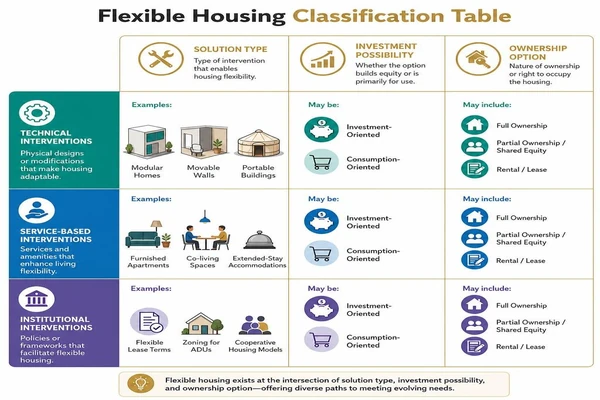
To truly understand flexible housing, it’s helpful to classify the various solutions available. The working paper by Glumac and Caballé-Fabra proposes a classification framework based on three key characteristics: solution type, investment option, and ownership possibility.
Solution Type Flexible housing solutions can be broadly categorized by the type of intervention they represent:
- Technical Interventions: These involve physical modifications or designs that make housing adaptable. Examples include modular homes that can be expanded or reconfigured, movable walls within an apartment, or portable buildings like yurts used for temporary occupation. The “Flex & Grow Home” concept, which we will discuss later, is a prime example of a technical intervention.
- Service-Based Interventions: These solutions focus on providing services that enhance housing flexibility. This includes fully furnished apartments, co-living spaces with shared amenities and services, or extended-stay hotels. The convenience of having utilities, internet, and even cleaning services included simplifies the living experience, especially for mobile individuals.
- Institutional Interventions: These are policy or regulatory frameworks that facilitate flexible housing. Examples include specific zoning laws that allow for accessory dwelling units (ADUs), flexible lease terms offered by housing providers, or cooperative housing models that define alternative ownership structures.
Investment Possibility Flexible housing can also be classified by whether it offers an investment opportunity for the occupant:
- Investment-Oriented: Some flexible housing options, such as equity cooperatives or certain types of condo hotels, allow residents to build equity or participate in the financial growth of the property.
- Consumption-Oriented: Many flexible solutions, like short-term rentals, furnished apartments, or co-living spaces, are primarily about consuming housing services rather than building long-term equity.
Ownership Option Finally, flexible housing can be distinguished by the nature of its ownership:
- Full Ownership: This might apply to modular homes placed on owned land or shares in an equity cooperative.
- Partial Ownership/Shared Equity: Intermediate tenures or certain time-sharing models fall into this category.
- Rental/Lease: The most common form, including traditional rentals, furnished apartments, and co-living arrangements, where the resident pays for the right to occupy the space for a defined period.
This classification helps us appreciate the diverse ways flexible housing manifests, from physical structures to service models and regulatory frameworks, all designed to meet the evolving needs of a mobile society.
Here’s a simplified table comparing these flexible housing classifications:
The Mechanics of Supportive Housing: The Flexible Housing Pool Workflow
While flexible housing solutions cater to a broad spectrum of needs, a critical application lies in addressing the challenges faced by high-needs individuals, particularly those experiencing homelessness or chronic instability. The Flexible Housing Pool (FHP) is an innovative model designed to connect these vulnerable populations to supportive housing efficiently. Its primary goals are threefold: establishing effective connections to supportive housing, creating new supportive housing opportunities, and implementing resources to increase overall efficiency in the placement process.
The FHP workflow represents a multi-agency, coordinated effort to streamline the path from crisis to stable housing. It focuses on individuals who are high utilizers of crisis systems, such as emergency rooms, shelters, and jails, recognizing that stable housing is a foundational step towards improving their health and well-being. By centralizing coordination and providing funding flexibility, the FHP aims to significantly reduce the length of time individuals spend without stable housing.
This process involves a detailed, sequential workflow that ensures consistent tracking and efficient housing placement. Unlike traditional housing programs where the move-in date might reflect the first night in a unit, the FHP typically tracks the Permanent Supportive Housing (PSH) lease date, emphasizing the formal establishment of long-term housing. This distinction is crucial for accurate reporting and understanding the true impact of the program. The structured approach of the FHP, detailed in resources like the Flexible Housing Pool Workflow, highlights its commitment to a systematic and data-driven strategy for addressing complex housing needs.
Outreach and Engagement Levels in the FHP Process
The Flexible Housing Pool (FHP) employs a structured approach to connect high-needs individuals with supportive housing, characterized by distinct levels of outreach and engagement. This multi-stage process ensures that participants receive appropriate support and guidance at every step.
- Outreach Stage: This initial phase involves identifying and engaging individuals who are experiencing homelessness or are at high risk. Often, outreach referrals originate from partner organizations, such as Cook County Health, which identifies high utilizers of crisis services. These referrals are then directed to coordinating bodies like the Center for Housing and Health for initial contact. The goal here is to establish trust and inform individuals about the FHP’s potential to provide stable housing. For comprehensive information on how such programs operate, resources like the Flexible Housing Pool – Chicago offer valuable insights into local implementations.
- Engagement and Screening: Once initial contact is made, the next step involves deeper engagement and thorough screening. This includes assessing an individual’s needs, verifying eligibility for supportive housing, and gathering necessary documentation. During this stage, clients are informed about the FHP’s participation requirements and benefits. A crucial part of this phase is the “Referral Ranking,” which can indicate the source of referrals, particularly from hospitals, to prioritize those with the most urgent needs. Re-referrals are also common, especially when new alerts appear in health systems, ensuring that individuals who might have disengaged are re-connected to the program.
- Enrollment and Housing: The final stage focuses on formal enrollment and the actual housing placement. Once an individual accepts FHP participation and is deemed eligible, they are officially enrolled. This often involves creating a project entry in a centralized data system, such as the CHH FHP PSH Project (HMIS ID 1610) within HMIS (Homeless Management Information System). The aim is to quickly facilitate move-in, securing a permanent supportive housing lease. For youth-specific FHP projects, outreach and transitional housing components might be handled separately from adult programs, reflecting the unique needs of younger populations. This tiered approach ensures that individuals are met where they are and guided effectively toward stable, supportive housing.
Tracking Progress with Referral Statuses
Reflective tracking is paramount to the success and efficiency of the Flexible Housing Pool (FHP). This is primarily achieved through the meticulous use of referral statuses within the Homeless Management Information System (HMIS). HMIS serves as a shared database across multiple agencies, allowing for real-time monitoring of client progress and ensuring seamless coordination.
Each step of a client’s journey through the FHP workflow is documented with specific referral statuses. For instance, a status like “FHP: Client accepts FHP participation” clearly marks a critical juncture in the process. This detailed tracking allows program administrators to understand where clients are in the pipeline, identify potential bottlenecks, and measure the speed of housing placement.
A key aspect of this tracking is the accurate recording of move-in dates. In the FHP, the move-in date reflects the Permanent Supportive Housing (PSH) lease date rather than just the first night an individual physically occupies a unit. This distinction is vital for program compliance and accurately measuring the time it takes to secure formal, long-term housing. Interim assessments in HMIS are used to track these move-in dates, ensuring that the data reflects the program’s ultimate goal of stable housing.
The system also accommodates specific program nuances, such as youth FHP projects. These projects often have distinct components, like transitional housing and specialized outreach, which are tracked separately to cater to the unique needs of younger individuals. The comprehensive nature of HMIS tracking, further detailed in official program guidelines like the Flexible Housing Pool Program – CSFA | GATA | Illinois.gov, ensures accountability, transparency, and a data-driven approach to improving outcomes for high-needs individuals.
Real-World Implementations and Design Innovations
Flexible housing solutions are not just theoretical concepts; they are being implemented in diverse and innovative ways across the globe, transforming how we think about residential spaces. These real-world applications often blend cutting-edge design with a focus on community and adaptability.
One prominent example is the rise of co-living spaces, particularly in dense urban centers. These environments offer private bedrooms within larger, shared living units, featuring communal kitchens, lounges, and workspaces. This model fosters a strong sense of community engagement and shared experiences, which is particularly appealing to young professionals, digital nomads, and individuals seeking connection in large cities. The design principles behind effective flexible living in these spaces prioritize versatility, allowing rooms to serve multiple purposes, and sustainability, using materials with minimal environmental impact. Shared spaces are intentionally designed to encourage spontaneous interactions and create a vibrant social fabric.
Modular construction is another significant design innovation. This approach involves manufacturing building components off-site and then assembling them on-location, allowing for quicker construction, reduced waste, and the ability to easily expand or reconfigure living spaces as needs change. This inherent adaptability makes modular homes a prime example of flexible housing, capable of evolving with their residents’ life stages.
Transformable layouts, often seen in smaller urban apartments, utilize movable walls, hidden furniture, and multi-functional spaces to maximize utility within a compact footprint. A single room might serve as a bedroom, office, and living area throughout the day, adapting to the resident’s activities. These design innovations are crucial for maximizing space and providing adaptability in urban environments where space is a premium. For those seeking adaptable living in a bustling city, exploring options like a Flexible 2 bed 2 bath Chicago apartment might reveal how modern design principles are being applied to create versatile and comfortable homes. These solutions are not just about physical space; they are about creating environments that support dynamic lifestyles and foster community connections.
Permanent Supportive Housing Initiatives
Among the most impactful applications of flexible housing solutions are Permanent Supportive Housing (PSH) initiatives, which provide stable homes and comprehensive services to individuals experiencing chronic homelessness. Flexible PSH Solutions, Inc., a California 501(c)3 Not-for-Profit Public Benefit Corporation founded in 2018, stands as a leading example in this field. Their mission in California is to bring a creative and replicable approach to establishing PSH, focusing on long-term housing stability for those in need.
The organization’s work is deeply rooted in the legacy of its founder, John Molloy, who dedicated his career to developing PSH communities. Flexible PSH Solutions aims to combine safe, long-term housing with essential supportive services, creating a caring and supportive environment that helps tenants stabilize their lives and remain housed. Their model emphasizes cost-effectiveness and replicability, making it a sustainable solution for addressing chronic homelessness across the state.
A landmark project exemplifying their mission is Enlightenment Plaza. This innovative development is transforming a long-vacant lot in Rampart Village, Los Angeles, into a vibrant supportive community. With an anticipated opening in November 2025, Enlightenment Plaza is designed to provide 387 units for individuals and families who have experienced homelessness. The project is strategically located near the Metro Red Line, ensuring residents have access to transportation and community resources. Beyond housing, it will offer a range of supportive services, including health and wellness programs, job readiness training, and educational support, all aimed at fostering healing, personal growth, and community connection.
The commitment to this mission is further underscored by the organization’s leadership. As detailed on their About – Flexible PSH Solutions page, and by reviewing the expertise of their board members on their Our Team – Flexible PSH Solutions page, it’s clear that the organization is driven by a deep understanding of the complexities of homelessness and a dedication to providing dignified, effective solutions. Their efforts demonstrate how flexible housing principles, when applied with a focus on supportive services, can profoundly impact the lives of vulnerable populations.
Future Trends in Flexible Housing Solutions
The trajectory of flexible housing solutions points towards an increasingly integrated, adaptable, and technologically advanced future. Several key trends are defining this evolution, promising even more responsive and sustainable living environments.
One significant trend is the continued integration of smart home technology. From automated lighting and climate control to advanced security systems, smart home features enhance convenience, energy efficiency, and personal safety. These technologies allow residents to customize their living spaces to an unprecedented degree, adapting the environment to their specific needs and preferences. For those interested in how these innovations are being applied in urban settings, a Smart Home Apartments Chicago Guide offers a glimpse into the cutting-edge features available in modern residences.
Another crucial development is the growing emphasis on eco-friendly materials and sustainable construction practices. As environmental awareness increases, flexible housing solutions are increasingly incorporating green building techniques, renewable energy sources, and materials with a low environmental footprint. This not only reduces the ecological impact of housing but also contributes to healthier living environments for residents.
The concept of the “Flex & Grow Home” represents a compelling vision for future residential design. These homes are specifically engineered to adapt across multiple life stages and uses. For example, they might feature independent living suites that can be used for extended family members, home-based businesses, or even short-term rentals, without compromising the privacy or functionality of the main residence. This approach, as highlighted by Introducing the Flex & Grow Home, offers unique solutions to meet the diverse and changing housing needs of today’s homeowners, providing unparalleled versatility and long-term value.
These trends collectively paint a picture of a future where housing is not a static entity but a dynamic system that evolves with its inhabitants, leveraging technology and sustainable practices to create truly flexible and responsive living spaces.
Challenges and Considerations in Implementation
While flexible housing solutions offer numerous benefits, their widespread implementation is not without challenges. These hurdles often involve navigating existing regulatory frameworks, addressing initial development costs, and ensuring resident acceptance and adaptation.
One of the most significant challenges stems from existing zoning laws and regulatory barriers. Traditional zoning often dictates rigid classifications for residential, commercial, and mixed-use properties, making it difficult to implement innovative flexible housing models like co-living spaces, modular homes, or homes with integrated rental units. Obtaining permits for non-traditional housing types can be a lengthy and complex process, sometimes requiring legislative changes or special variances. These regulatory obstacles can slow down development and increase project costs.
Initial development hurdles can also be substantial. While flexible housing might offer long-term cost savings and adaptability, the upfront investment for specialized designs, modular construction, or integrated smart home technologies can sometimes be higher than conventional builds. Convincing investors and developers of the long-term viability and market demand for these innovative solutions requires clear data and compelling case studies.
Resident adaptation and acceptance are equally important. While many embrace the concept of flexible living, some residents may initially resist changes to traditional housing norms, such as shared living arrangements or smaller, multi-functional spaces. Educating potential residents about the benefits-such as community engagement, cost-effectiveness, and adaptability-is crucial for successful adoption.
Practical considerations also arise, such as pet policies in flexible living environments. Many furnished apartments and co-living spaces are increasingly pet-friendly, recognizing the importance of pets to residents’ well-being. However, policies often include specific restrictions, such as a common two-pet limit, breed restrictions, and additional pet rent or fees. Understanding these nuances is important for both residents and providers. For those seeking adaptable living arrangements that accommodate companions, exploring options for Furnished Apartments Chicago can provide insights into how property managers balance flexibility with practical considerations. Addressing these challenges systematically is essential for flexible housing to reach its full potential and become a mainstream solution in urban environments.
Frequently Asked Questions About Flexible Housing Solutions
As flexible housing gains traction, many common questions arise regarding its purpose, functionality, and practical aspects. Here, we address some of the most frequently asked questions.
What is the primary goal of the Flexible Housing Pool?
The primary goal of the Flexible Housing Pool (FHP) is to efficiently connect high-needs individuals, particularly those experiencing chronic homelessness, to permanent supportive housing. This is achieved through centralized coordination among multiple agencies, which significantly reduces the time it takes for participants to secure stable housing. The FHP aims for system integration, ensuring that resources and services are streamlined to provide comprehensive support. This model is crucial for addressing complex social challenges, as demonstrated by initiatives like the Flexible Housing Pool Reentry Pilot Program – ICJIA, which focuses on specific populations with high needs.
How does technology enhance modern flexible living?
Technology plays a transformative role in enhancing modern flexible living by making spaces more adaptable, efficient, and user-friendly. Smart home systems, for instance, allow residents to control lighting, temperature, security, and entertainment with ease, personalizing their living environment. Online platforms facilitate the discovery, booking, and management of flexible housing options, from short-term rentals to co-living spaces, connecting residents with suitable accommodations globally. Furthermore, technology in modular design and construction enables quicker, more sustainable, and reconfigurable housing solutions. These advancements contribute to a seamless and responsive living experience, as explored in guides like the Modern Apartments Chicago IL Guide, showcasing how modern amenities integrate with flexible lifestyles.
What is the difference between furnished and turnkey apartments?
While often used interchangeably, there’s a subtle but important distinction between furnished and turnkey apartments. A furnished apartment typically includes essential furniture and major appliances, such as a bed, sofa, dining table, refrigerator, and stove. It provides the basic necessities to move in without purchasing large items. A turnkey apartment, on the other hand, goes a step further. It includes everything a furnished apartment offers, plus all the smaller household items needed for immediate living. This means linens, towels, kitchenware (pots, pans, dishes, utensils), small appliances (toaster, coffee maker), and often even decorative elements. Essentially, with a turnkey apartment, you can arrive with just your personal belongings and immediately start living comfortably. This level of immediate readiness is particularly appealing to those relocating or needing temporary housing, as detailed in guides like the Furnished Apartments Uptown Chicago Ultimate Guide.
Conclusion
The evolution of flexible housing solutions marks a significant shift in how we approach urban living. Driven by increasing global mobility, changing demographics, and a desire for greater adaptability and community, these innovative housing models are reshaping our cities. From the academic definitions that highlight relocation ease and housing security to the practical implementation of Permanent Supportive Housing initiatives and the cutting-edge designs of modular and smart homes, flexible housing is poised to meet the diverse needs of modern residents.
While challenges such as regulatory hurdles and initial development costs persist, the benefits of adaptable, community-focused, and technologically integrated living spaces are undeniable. As we look to the future, we anticipate continued growth in this sector, offering more sustainable, responsive, and fulfilling housing options for everyone. The future of urban living is flexible, and we are excited to be part of this transformative journey.
To explore how these concepts translate into tangible living spaces, we invite you to review our diverse Floorplans and envision your next home. If you’re ready to experience modern flexible living firsthand, don’t hesitate to Schedule a Tour with us.
