

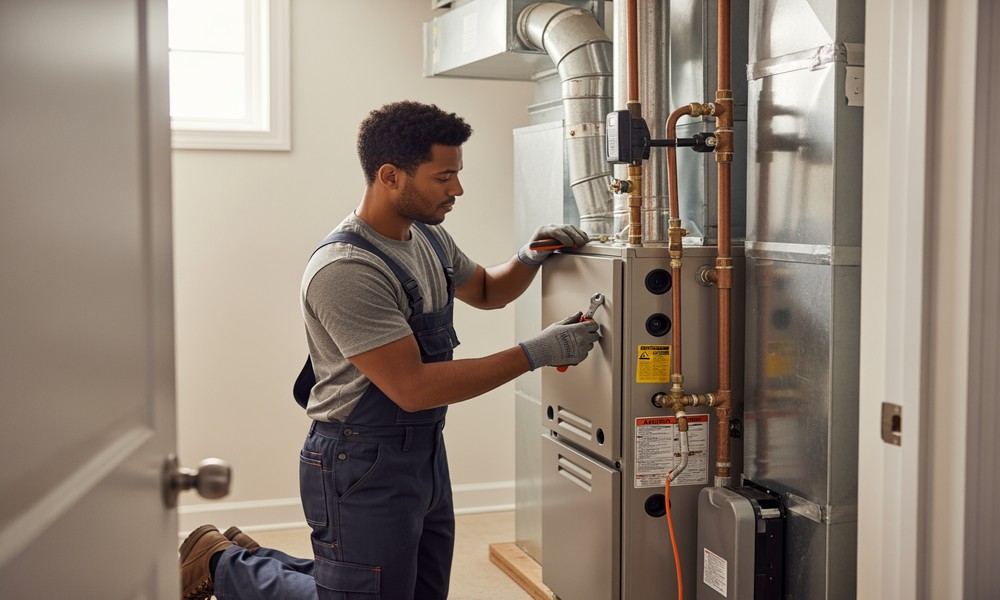
The Critical Role of HVAC Emergency Services
In Scottsdale, where temperatures can swing dramatically from warm days to surprisingly cold desert nights, a fully functional heating, ventilation, and air conditioning (HVAC) system is not just a luxury-it’s a necessity for comfort and safety. When our furnace falters, especially during the cooler months, it can quickly escalate from an inconvenience to a serious concern. This is where the critical role of HVAC emergency services comes into play. Rapid response and 24/7 availability from skilled technicians are paramount for promptly addressing system failures, mitigating potential safety hazards, and restoring warmth before the desert chill truly sets in.
A malfunctioning furnace can pose several risks beyond mere discomfort. For instance, a cracked heat exchanger can cause carbon monoxide leaks, an odorless, colorless gas that can be deadly. Electrical issues can become fire hazards, and gas leaks are, of course, extremely dangerous. During unexpected cold snaps, which Scottsdale does experience, a heating outage can also lead to issues like frozen pipes, causing significant property damage. Our reliance on these systems means that when they fail, particularly outside of regular business hours, having access to immediate, expert help is non-negotiable. Professional emergency services ensure that these critical issues are addressed with the urgency and expertise they demand, protecting our homes and families from the unpredictable nature of extreme weather.
Warning Signs Requiring HVAC Emergency Services
Recognizing the warning signs that your furnace needs immediate professional attention can prevent minor issues from becoming major, costly repairs or, worse, safety hazards. While some problems can wait for a scheduled appointment, others demand emergency intervention.
One of the most obvious indicators is unusual noises. Furnaces are designed to operate relatively quietly. If you start hearing banging, rattling, screeching, or grinding sounds, it often signals a mechanical problem. Banging could indicate issues with the ductwork or igniter, rattling might point to loose components, and screeching often suggests a failing motor bearing. These noises are rarely benign and usually mean parts are worn, loose, or about to fail completely. Ignoring them can lead to more extensive damage to the unit.
Burning odors or sulfur smells are particularly alarming. A burning smell, especially one resembling melting plastic or electrical wiring, could indicate an electrical problem or overheating components. A distinct sulfur or rotten-egg smell almost always indicates a gas leak, which poses an immediate and severe safety risk. If you detect such an odor, it’s crucial to turn off your furnace, open windows, evacuate your home, and call for emergency service from a safe distance.
Weak airflow or a complete lack of heat output, even when the thermostat is set correctly, is a clear sign of trouble. This could be due to a clogged filter, a malfunctioning blower motor, or an issue with the heating element itself. Similarly, short cycling, where the furnace turns on and off frequently without completing a full heating cycle, indicates an underlying problem that reduces efficiency and puts undue stress on the system.
Finally, thermostat malfunctions can sometimes be the culprit, but if resetting it doesn’t resolve the issue, the problem likely lies within the furnace itself. An unresponsive thermostat or one that displays incorrect readings can leave your home either too cold or too hot, and if the furnace isn’t responding to its commands, it’s time to call in the experts. Recognizing these critical signs and acting swiftly is essential for maintaining a safe and comfortable home environment.
Immediate Steps During HVAC Emergency Services
When faced with a furnace emergency, knowing a few immediate steps can help ensure safety and potentially minimize damage while waiting for professional help. Our primary goal is always to prioritize everyone’s safety in the home.
First, if your furnace has completely stopped working or if you’re experiencing weak airflow, check your circuit breakers. Sometimes, a tripped breaker is the simple solution. Locate your electrical panel and see if any breakers are in the “off” or “tripped” position. Resetting it might restore power. Simultaneously, verify your thermostat settings to ensure it’s set to “heat,” and the temperature is above the current room temperature. A simple oversight here can often lead to a perceived furnace failure.
If you detect a gas-like odor (rotten eggs) or suspect a carbon monoxide leak (which can cause flu-like symptoms), immediately turn off your furnace and any other gas appliances. Open windows and doors to ventilate your home, and evacuate everyone, including pets, to a safe location outside. Once safely away, call your gas company and then an emergency HVAC service provider. Do not re-enter your home until it has been declared safe by professionals.
For other issues, such as unusual noises or a persistent lack of heat, you can perform a quick filter inspection. A severely clogged air filter can restrict airflow, causing the furnace to overheat or shut down. Replacing a dirty filter is a simple DIY task that can sometimes resolve minor performance issues. However, for anything beyond these basic checks, it’s crucial to resist the urge to perform complex DIY repairs. Furnaces involve gas lines, electrical components, and high temperatures, making them dangerous to tamper with without proper training.
Instead, once you’ve taken these initial safety measures, contact a reliable HVAC company for professional diagnosis and emergency dispatch. Be prepared to describe the symptoms you’re experiencing, any steps you’ve already taken, and any unusual sights, sounds, or smells. This information will assist the technician in arriving prepared and expediting the repair process. Adhering to safety protocols is paramount, and leaving complex repairs to certified experts is always the safest and most effective approach.
Proactive Maintenance for Desert Climate Reliability
In Scottsdale’s unique desert environment, where fine dust and extreme temperature fluctuations are common, proactive furnace maintenance is not merely a recommendation-it’s a critical strategy for ensuring reliability and efficiency. Our climate places particular demands on heating systems, making regular care even more vital than in more temperate regions.
Consider the contrast between homeowner maintenance tasks and professional tune-up services:
Homeowner Maintenance Tasks Professional Tune-Up Services Regular air filter replacement (monthly/quarterly) Comprehensive system inspection and cleaning Keeping vents clear of obstructions Checking and calibrating thermostat accuracy Monitoring thermostat settings Inspecting and cleaning burner assembly and ignition system Listening for unusual noises Lubricating moving parts (e.g., blower motor bearings) Tightening electrical connections and checking voltage/current Inspecting heat exchanger for cracks or damage Checking gas pressure and fuel lines for leaks Measuring airflow and adjusting for optimal performance Performing safety checks for carbon monoxide The pervasive desert dust is a significant factor in Scottsdale. Fine particulate matter can quickly accumulate on internal components, including evaporator and condenser coils, blower motors, and air filters. This buildup acts as an insulating layer, reducing the system’s ability to transfer heat efficiently and forcing it to work harder. Consequently, energy consumption increases, and component wear and tear accelerate, leading to premature failures. Regular filter replacement, ideally every one to three months depending on usage and household conditions, is a simple yet effective homeowner task to combat this. However, professional coil cleaning and internal component cleaning go much further in ensuring optimal performance.
Seasonal inspections are particularly important here. Before the heating season begins in the fall, a professional tune-up ensures that your furnace is ready to handle the cooler nights. During this service, technicians will clean the burner assembly, check the ignition system, lubricate moving parts, and inspect electrical connections. These meticulous checks are designed to optimize airflow optimization, enhance system longevity, and significantly improve energy efficiency. By catching potential issues early, we can prevent costly emergency repairs and extend the overall lifespan of our heating systems.
Partnering with a trusted provider for proactive maintenance is an investment that pays dividends in comfort, safety, and savings. For homeowners seeking reliable heating solutions, understanding the importance of expert care is paramount. When it comes to finding Scottsdale’s top emergency furnace repair and maintenance services, prioritizing companies with a strong track record of thorough, preventive care is key. Regular professional maintenance helps ensure that our furnaces operate at peak performance, providing consistent warmth and peace of mind throughout Scottsdale’s distinctive climate.
Determining When to Repair or Replace a System
One of the most challenging decisions for any homeowner is whether to repair a failing furnace or replace it entirely. This choice involves weighing several factors, including the system’s age, repair frequency and cost, rising energy bills, and potential safety concerns. Making an informed decision can save us money, improve home comfort, and enhance safety in the long run.
The system’s age is often the first indicator. Most HVAC systems, including furnaces, are designed to last between 10 and 15 years with proper maintenance. As a furnace approaches or exceeds this age range, its efficiency naturally declines, and components begin to wear out. If your furnace is older than 15 years and requires a significant repair, replacement might be the more cost-effective option. The older a system gets, the more frequently it tends to break down, leading to a cycle of repairs that can quickly add up.
Frequent repairs are a clear sign that your furnace might be nearing the end of its useful life. If you find yourself calling for service multiple times a year, or if the cost of a single repair approaches a significant percentage of the cost of a new unit (e.g., 50%), it’s typically more economical to replace. Continually pouring money into an aging, unreliable system can become a financial drain without providing the consistent comfort we expect.
Rising energy bills are another critical clue. An inefficient furnace has to work harder and longer to heat our homes, consuming more fuel in the process. If you notice a sudden or gradual increase in your heating costs without a corresponding change in usage habits or utility rates, it could be a sign that your furnace is losing its efficiency. Newer models boast significantly higher efficiency ratings, meaning they convert more fuel into usable heat, leading to substantial long-term savings on utility bills.
Safety concerns, such as a cracked heat exchanger, are non-negotiable reasons for replacement. A cracked heat exchanger can allow carbon monoxide to leak into our homes, posing a severe health risk. While some cracks can be repaired, many technicians will recommend immediate replacement due to the inherent danger and because a cracked heat exchanger often indicates widespread internal degradation in an older unit.
Furthermore, technological advancements in modern furnaces offer compelling reasons for replacement. Today’s high-efficiency models often feature variable-speed blowers and dual-fuel systems, which provide more precise temperature control, quieter operation, and even greater energy savings. They can also integrate better with smart home systems, offering enhanced control and monitoring. Replacing an old unit can significantly improve indoor air quality through better filtration and reduce environmental impact by lowering energy consumption. While repairing an older furnace might seem like a cheaper immediate solution, a new, efficient system can offer greater comfort, safety, and long-term financial benefits.
Frequently Asked Questions about HVAC Emergency Services
Understanding the nuances of furnace operation and maintenance is key to ensuring our homes remain comfortable and safe. Here, we address common questions homeowners have about their heating systems, especially in Scottsdale’s unique climate.
What are the most common indicators that a furnace needs immediate attention?
Several signs can indicate that your furnace needs prompt professional attention, especially in Scottsdale, where we rely on our heating systems during cooler periods. Uneven heating or “cold spots” in your home is a primary indicator. If some rooms are warm while others remain chilly, it suggests the furnace isn’t distributing heat effectively, possibly due to a failing blower, ductwork issues, or a problem with the heating element itself.
Strange vibrations or unusual noises, as discussed earlier, are also critical warning signs. Beyond the typical operational hum, grinding, squealing, or persistent rattling, these sounds often indicate mechanical wear and tear that requires immediate inspection to prevent further damage.
A sudden spike in utility bills without a corresponding increase in usage indicates that your furnace is working harder than it should be to maintain temperature, meaning it’s losing efficiency. This could be due to a range of issues, from a clogged filter to a more serious internal malfunction.
The color of your furnace’s pilot light (for gas furnaces) is a crucial visual cue. It should always be blue. If you observe a yellow or orange flame, it could signal incomplete combustion, which can produce carbon monoxide-a dangerous gas. This requires immediate professional assessment.
Finally, persistent cycling issues, such as the furnace turning on and off too frequently (short cycling) or running continuously for extended periods, both indicate problems. Short cycling can be caused by an oversized unit, a dirty flame sensor, or a clogged filter, while continuous running might point to a faulty thermostat or an undersized unit struggling to meet demand. Any of these indicators warrants a call to a qualified HVAC technician to ensure both the efficiency and safety of our heating system.
How does the Scottsdale climate affect the frequency of system maintenance?
Scottsdale’s unique desert climate plays a significant role in determining how often our HVAC systems, including furnaces, require maintenance. While we’re known for our heat, the cooler desert nights and occasional cold snaps mean our furnaces do get used, and the environment here presents specific challenges.
The most prominent factor is desert dust and fine particulate matter. Our arid environment is prone to dust storms and a general presence of fine airborne particles. This dust can easily infiltrate HVAC systems, accumulating on filters, coils, and moving parts. This buildup acts as an insulator, reducing the system’s efficiency and forcing it to work harder. Over time, this increased strain can lead to premature wear and tear, higher energy consumption, and an increased risk of breakdowns. For this reason, we often recommend more frequent filter changes and professional cleaning than in less dusty regions.
Furthermore, extreme temperature swings are common in Scottsdale. Days can be warm, but nights can drop significantly, especially in winter. These fluctuations mean our heating systems can cycle on and off more frequently, particularly during seasonal transitions. This constant starting and stopping puts additional stress on components, leading to faster wear.
The relatively short but intense heating season in Scottsdale also means that furnaces might sit dormant for several months. During this period, dust can settle, and components can stiffen. When the system is suddenly called upon to work again in the fall, any underlying issues can be exacerbated.
Considering these factors, we typically recommend professional tune-up intervals at least twice a year-once in the spring for your cooling system and once in the fall for your heating system. This ensures that both systems are thoroughly inspected, cleaned, and optimized before they are heavily relied upon. Such proactive maintenance helps combat the effects of dust, manages the stress from temperature swings, and ensures our furnaces are ready to provide reliable warmth when Scottsdale’s cooler nights arrive.
What certifications should a reliable technician possess?
When selecting a furnace repair technician in Scottsdale, verifying their credentials is paramount to ensuring you receive professional, high-quality, and safe service. Not all technicians are created equal, and specific certifications indicate a commitment to excellence and adherence to industry standards.
One of the most respected certifications in the HVAC industry is the NATE certification (North American Technician Excellence). NATE-certified technicians have demonstrated their knowledge and skills through rigorous, industry-developed exams. This certification signifies a technician’s expertise in various HVAC specialties, including furnace installation, service, and repair. Choosing a NATE-certified professional gives us confidence that they possess a high level of technical proficiency and are up to date with the latest industry practices.
For any work involving refrigerants (which, while primarily associated with ACs, can be part of some heat pump systems that also provide heat), EPA compliance is essential. The Environmental Protection Agency mandates that technicians who handle refrigerants must be certified to do so safely and responsibly, preventing harmful releases into the atmosphere. This ensures environmental protection and adherence to legal requirements.
Beyond certifications, it’s crucial that the company and its technicians operate under license. Licensing ensures that the business meets state and local regulatory requirements, indicating a baseline level of competence and legality. Similarly, being in a bonded status provides us as homeowners with a layer of financial protection, covering potential damages or incomplete work. Insured professionals are also non-negotiable; this protects both the technicians and our property in case of accidents or unforeseen issues during service.
Finally, look for technicians who have undergone manufacturer-specific training. While NATE certification covers broad industry knowledge, specialized training from furnace manufacturers (such as Trane, Lennox, or Carrier) provides in-depth knowledge of specific brands and models, which can be invaluable for accurate diagnosis and repair. These combined credentials ensure that the technician arriving at our home is not only skilled but also operates with the highest standards of safety, professionalism, and expertise, providing us with peace of mind and reliable furnace repair.
Conclusion
Ensuring our homes remain comfortable and safe year-round in Scottsdale’s unique climate hinges significantly on the reliable performance of our heating and cooling systems. From recognizing the subtle warning signs of a struggling furnace to taking proactive maintenance steps, we play a crucial role in the long-term performance and efficiency of our HVAC units. The desert environment, with its dust and temperature extremes, demands a diligent approach to preventative care, making regular inspections and tune-ups not just advisable, but essential.
The goal is to achieve uninterrupted home safety and consistent comfort. This is best accomplished through a strong professional partnership with a top-rated HVAC service provider. By entrusting our heating needs to certified, experienced, and reputable technicians, we ensure that our furnaces receive the expert attention required to operate efficiently, safely, and reliably for years to come. Investing in quality furnace repair and maintenance in Scottsdale is an investment in our home’s well-being and our family’s peace of mind.
