

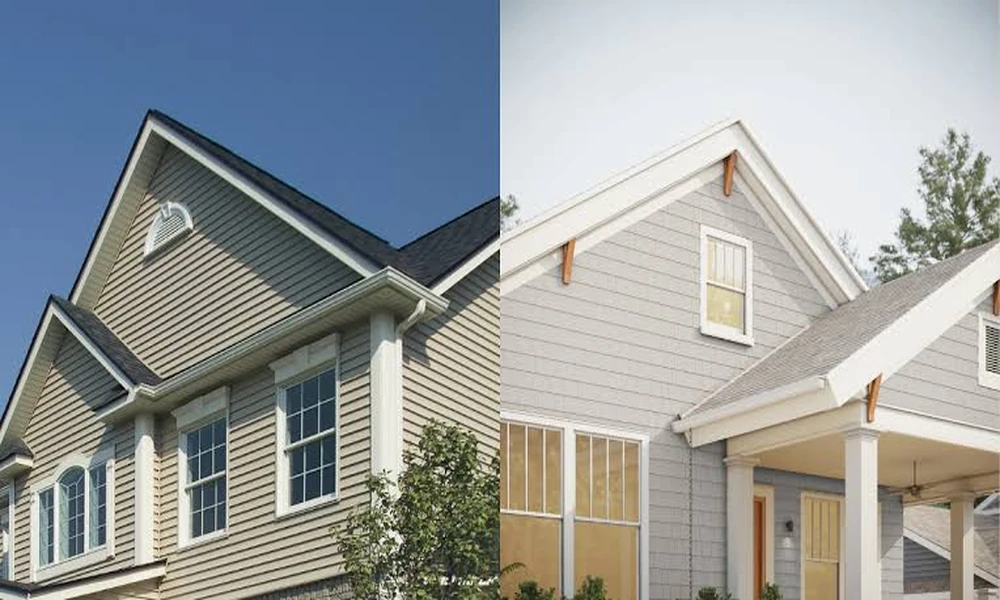
Most siding decisions get made indoors. Someone holds two sample boards under showroom lights, compares the colors, glances at the price sheet and picks one. That works well enough a hundred miles inland. A few blocks from the Atlantic, though, the better test is what each material looks like after eight years of salt fog, August sun and the occasional nor’easter pushing rain sideways into every lap and seam.
Along the southern Delaware coast, the debate nearly always narrows to two contenders. Vinyl is light, affordable and never needs paint. Fiber cement is heavy and rigid, and it holds a painted finish that can pass for real wood. Both can serve a beach house well, and both can fail early when the details are wrong.
Homeowners from Fenwick Island up to Dewey Beach who bring in an Ocean View siding contractor for a full replacement or a storm repair usually reach the same fork in the road, so it helps to look at how each option holds up against the specific forces a shore house faces rather than against a generic checklist. What follows takes those forces one at a time.
When the Wind Comes Off the Water
Wind is where the two materials behave most differently. Vinyl is flexible and hangs on its nails rather than being pinned tight, which lets it slide as it expands and contracts. The tradeoff is that a strong gust can catch a loose panel edge and peel a whole course loose. Fiber cement is stiff and dense, so it resists flexing and stays put once it is fastened correctly.
The gap closes considerably with better vinyl. Research from Home Innovation Research Labs explains that premium vinyl made for high wind is thicker than standard panels and must carry a certified rating, and that some high-wind regions require a permit even for siding replacement on an existing home. Thicker vinyl with a reinforced nailing hem behaves very differently from the thin builder-grade panels that tend to end up scattered across lawns after a storm.
Salt Spray and the Parts You Don’t See
Neither vinyl nor fiber cement corrodes. The trouble with salt shows up in everything that holds them in place. Fasteners, flashing, J-channel trim and the metal trim around windows all live in that salty air too. Ordinary electro-galvanized nails can rust and bleed streaks through a painted fiber cement wall within a few years close to the beach.
Near the water, stainless steel or heavily hot-dipped galvanized fasteners are worth the small added cost on either material. Aluminum trim coil should be coated and kept away from direct contact with treated lumber, which can accelerate corrosion. A siding job is only as durable as its least protected nail.
A Summer of Sun on a Wide Open Lot
Beach houses often sit on lots with few mature trees and plenty of reflected light from sand, water and neighboring windows. That is hard on both materials, in different ways.
Vinyl softens with heat. Dark colors absorb more of it, which is why some manufacturers limit dark shades or offer special heat-resistant formulas. Reflected sunlight from a neighbor’s low-emissivity window glass can even warp a panel in a single afternoon. Fiber cement does not soften, but its paint does fade, and south and west walls lose color faster than the shaded sides of the house.
Water That Gets Behind the Wall
Wind-driven rain will get behind any siding eventually. The real question is what happens next. Vinyl is designed as a rain screen with loose joints, so water that sneaks in can drain out the bottom, provided the house wrap and window flashing underneath were installed properly.
Fiber cement handles water well on its face, but its cut edges and bottom edges can absorb moisture if they were left unsealed or set too close to a roofline, deck or ground. Installers generally keep fiber cement a clear distance above roofs and grade and prime every field cut. Some coastal builders add a thin vented gap behind the siding, a rainscreen, which helps both materials dry out after a soaking storm.
How the Two Stack Up Side by Side
| Coastal factor | Vinyl | Fiber cement |
|---|---|---|
| Wind | Good with thick, high-wind rated panels | Strong when fastened to spec |
| Salt air | Panel unaffected, fasteners matter | Panel unaffected, fasteners matter |
| Sun and heat | Can warp, darker colors are riskier | Stable, paint fades over time |
| Moisture | Drains well if underlayment is right | Edges must be sealed and kept clear |
| Impact and fire | Can crack in cold, melts near grills | Hard to dent, noncombustible |
| Upkeep | Washing only | Washing plus periodic repainting |
| Upfront cost | Lower | Noticeably higher |
Grills, Hail and Flying Patio Chairs
Life on a vacation property brings its own kind of abuse. A gas grill parked too close to a vinyl wall can leave a melted, sagging patch by the end of one long weekend. Vinyl also turns brittle in deep cold, so a January hailstorm or a wind-tossed chair can crack it.
Fiber cement shrugs off most of that. It does not burn, and it takes a hit from a blown deck umbrella with little more than a scuff. That durability is one reason it shows up so often on larger rental homes that see a steady rotation of guests.
What the Next Twenty Years Cost
Vinyl wins on day one. It usually costs less to buy and install, and its color runs all the way through, so there is never a paint bill. Fiber cement costs more up front, and even factory-finished boards will eventually need repainting, often after a decade or more depending on exposure.
On the other side of the ledger, quality fiber cement often outlasts vinyl near the shore and can help with resale on higher-end properties. For a modest cottage the owner plans to keep simple, vinyl frequently makes more financial sense. For a home that rents at premium rates or sits in the first few rows from the beach, fiber cement tends to justify its price.
The Installer Matters More Than the Board
Here is the part showroom samples never show. A carefully installed vinyl wall will outperform a sloppy fiber cement wall almost every time, and the reverse holds just as true. Vinyl that is nailed too tight buckles in the heat. Fiber cement that is face-nailed carelessly or left unprimed at the cuts swells and cracks. Missing kickout flashing, poorly lapped house wrap and window openings without proper flashing ruin either material from behind.
So the smartest comparison on a coastal job is less about vinyl against fiber cement and more about how each will be fastened, flashed and finished on your particular house. Ask what fasteners will be used, how the window openings will be wrapped, whether the panels carry a high-wind rating and how cut edges will be sealed. The answers will tell you far more about how the wall will look a decade from now than any sample board ever could.
