

Introduction
In June 2026, enhancing a building’s exterior goes beyond simple aesthetics; it’s about maximizing functionality, boosting property value, and embracing modern living trends. Homeowners and property managers alike are looking to transform every available space, from the street-level curb appeal to the often-overlooked potential of rooftops. This focus on comprehensive exterior solutions offers significant benefits, creating more usable areas and improving overall appeal.
This extensive guide dives into key aspects of modern exterior property solutions. We will explore how elements like garage doors contribute to curb appeal and security. More importantly, we’ll shift our focus to the exciting world of rooftop spaces. We’ll cover everything from understanding structural roof decking to the detailed engineering, waterproofing, and material selection needed to create a safe and beautiful rooftop deck. As homeowners and property managers seek to maximize every square foot, transforming often-overlooked spaces, such as rooftops, has become a top priority. This desire extends to all exterior elements, from the foundational appeal of garage doors to innovative exterior decking solutions like those from Skydeck exterior decking.
Join us as we uncover the best practices and considerations for integrating these valuable exterior additions into your property.
Modernizing Curb Appeal with Garage Doors and Exterior Property Solutions
The garage door, often the largest single feature on a home’s facade, plays a pivotal role in defining its curb appeal and overall aesthetic. In 2026, it’s no longer just a functional entry point for vehicles; it’s an integral component of a building’s exterior design, capable of significantly influencing property value and energy efficiency. A well-chosen garage door can elevate a home’s architectural style, providing a cohesive look that complements other exterior elements.
Selecting Garage Door Materials for Long-Term Durability
When considering a garage door, material selection is paramount for ensuring long-term durability, performance, and aesthetic appeal. Each material offers distinct advantages:
- Steel Doors: These are among the most popular choices due to their strength, low maintenance, and versatility. Steel doors can be embossed to mimic the look of wood grain or painted in a wide array of colors to match any exterior palette. Their robust construction makes them highly resistant to dents and rust, especially when coated with a durable finish. For added thermal performance, steel doors often come with insulation options, significantly improving the garage’s energy efficiency.
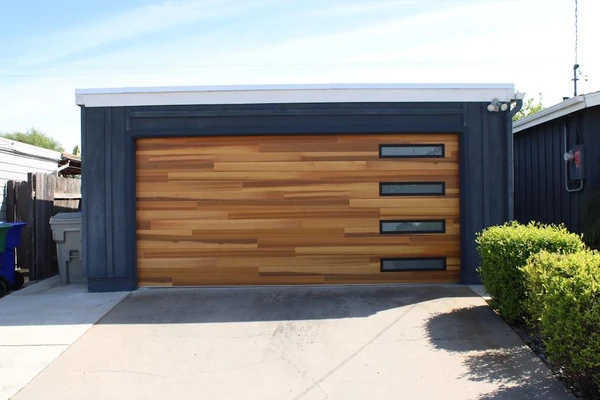
- Wood Composite Doors: Offering the classic warmth and beauty of natural wood without the extensive maintenance, wood composite doors are an excellent alternative. They are engineered from recycled wood fibers and resins, providing enhanced resistance to rot, warping, and insect infestation. These doors can be stained or painted, allowing for customization while contributing to a sophisticated, timeless aesthetic.
- Aluminum Frame Doors: For a sleek, contemporary look, aluminum frame doors with glass panels are increasingly favored. These doors provide ample natural light and a modern, minimalist design that perfectly suits architectural styles featuring clean lines and expansive windows. While offering less insulation than solid steel or composite options, their visual impact is undeniable, transforming the garage into a design statement.
Beyond aesthetics, insulation values are a critical consideration. An insulated garage door can help maintain a more stable temperature within the garage, which is particularly beneficial if the garage is attached to living spaces or used as a workshop. This contributes directly to the home’s overall thermal efficiency and can lead to reduced energy bills. Furthermore, robust weather stripping and proper installation are essential to ensure the door effectively seals against the elements, protecting the garage interior from moisture and drafts.
Integrating Garage Doors into Comprehensive Exterior Property Solutions
Modern garage doors are increasingly integrated into smart home ecosystems, offering features like remote operation, automatic closing, and security alerts. This technological advancement enhances convenience and security, making the garage an even more functional part of the home.
Architectural cohesion is key. The design, color, and material of the garage door should harmonize with the home’s roofing, siding, windows, and entry doors. For example, a home with a contemporary design might benefit from a sleek aluminum and glass door, while a traditional home might call for a carriage-house style composite door. Thoughtful selection ensures that the garage door enhances, rather than detracts from, the property’s overall appeal.
Security features have also evolved, with advanced locking mechanisms and reinforced construction providing greater peace of mind. As part of a comprehensive exterior property solution, the garage door contributes not only to the visual appeal but also to the safety and comfort of the entire household.
Structural Roof Decking vs. Rooftop Walking Decks
Understanding the fundamental difference between structural roof decking and a rooftop walking deck is crucial for anyone considering a rooftop renovation. While both are integral to the roof system, they serve distinct purposes and have vastly different structural and material requirements.
What is Structural Roof Decking?
Structural roof decking, often referred to as roof sheathing, is the foundational layer installed directly over the roof rafters or trusses. Its primary role is to provide a continuous, stable surface that supports the roofing materials (shingles, membranes, tiles) and distributes their weight, along with snow and wind loads, evenly across the roof’s framing. It also contributes significantly to the roof’s structural integrity, preventing sagging and enhancing the building’s resistance to uplift forces.
Common materials for structural roof decking include:
- Plywood Sheathing: A widely used option, particularly CDX plywood, which is rated for exterior use due to its durability and resistance to moisture. Standard CDX plywood decking typically costs between $2-$5 per square foot. For a 2,000 square foot house, this could mean an investment of $4,000-$10,000 for the decking material alone, requiring about 60 sheets.
- Oriented Strand Board (OSB) Panels: An economical alternative to plywood, OSB is made from compressed wood strands and resins. It offers comparable strength and performance to plywood in many applications and can be a cost-effective choice for structural sheathing.
- Metal Decking: Predominantly used in commercial and industrial construction, metal decking provides superior strength and span capabilities. These corrugated steel panels, such as B-deck (1.5″ deep, 36″ wide) and N-deck (3″ deep, 24″ or 32″ wide), are installed over structural steel supports. They serve as a structural base for insulation and roofing membranes. Metal deck gauges typically range from 22ga to 16ga, with 18ga B deck being frequently specified. Systems like Vulcraft’s PunchLok II can significantly speed up installation, being up to 10 times faster than traditional welding.
- Homasote EasyPly Roof Decking: This is an example of a specialized structural decking product made from 98% recycled paper content. It’s designed for use as a load-bearing decking in various buildings and can achieve insulation values up to R-32 when combined with nail base roof insulation, offering both structural support and thermal benefits.
It’s important to differentiate structural decking from underlayment. While decking provides the structural base, underlayment is a layer applied over the decking, acting as a moisture barrier to protect the sheathing from water infiltration. Underlayment is typically made from synthetic materials, self-adhering membranes, or asphalt felt, and is not a structural component itself.
Transitioning to Rooftop Walking Decks as Exterior Property Solutions
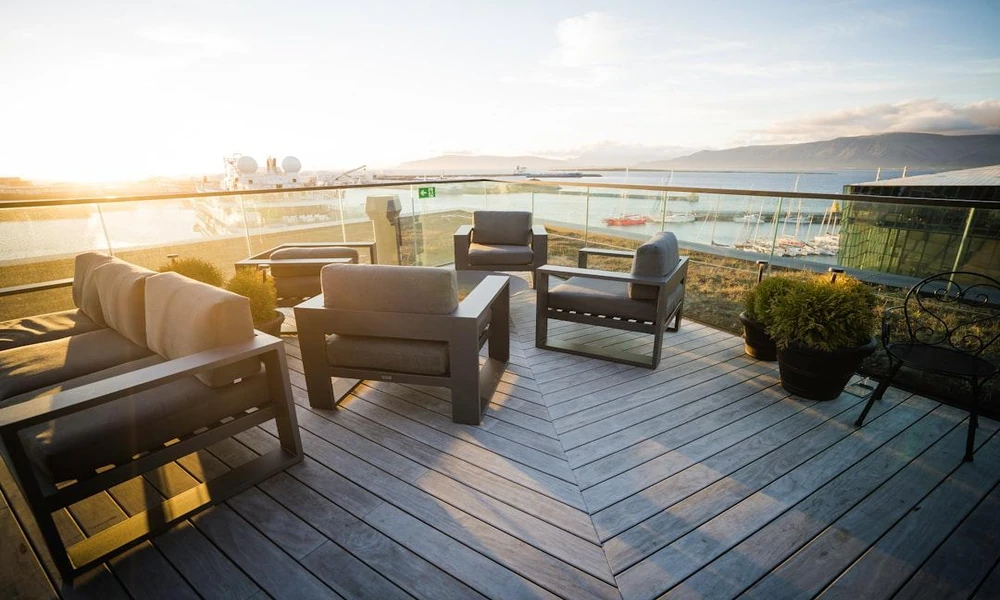
A rooftop walking deck, in contrast to structural roof decking, is an additional layer built on top of an existing, properly waterproofed roof system. Its purpose is to transform an otherwise unused flat roof space into a habitable, functional outdoor living area. This transition represents a significant upgrade, optimizing space in urban environments or properties with limited ground-level outdoor areas.
Rooftop decks offer unparalleled views, privacy, and an opportunity for creative outdoor design, from dining areas and gardens to quiet retreats. However, because they are built over living spaces and are designed for foot traffic and furniture, they introduce complex considerations regarding structural load, waterproofing integrity, and building code compliance that are far more stringent than those for a standard roof. The materials and construction methods for a rooftop walking deck must be chosen carefully to ensure safety, durability, and the long-term protection of the building below.
Engineering, Waterproofing, and Material Selection for Rooftop Decks
Creating a successful rooftop deck demands meticulous planning, especially concerning structural integrity, robust waterproofing, and appropriate material selection. The specific challenges of a rooftop environment-exposure to extreme weather, constant UV radiation, and the critical need to prevent leaks into occupied spaces below-make this project significantly different from building a ground-level deck.
Load Capacity and Structural Engineering Standards
One of the most critical initial steps for any rooftop deck project is a thorough structural assessment. Standard residential roofs are typically designed to handle live loads of 20-30 pounds per square foot (psf). However, a rooftop deck, which will support people, furniture, planters, and potentially snow, requires a minimum live load capacity of 55 psf. This significant difference often necessitates structural reinforcement of the existing roof framing.
We cannot overstate the importance of engaging a qualified structural engineer. Their assessment, which typically costs between $300 and $700, will determine if the existing structure can support the additional “dead load” (weight of the deck materials themselves) and “live load” (weight of people and movable objects). Without this assessment, we risk structural failure, which can have catastrophic consequences.
Building codes also dictate other crucial aspects, including fire-rating requirements. For rooftop decks built over living spaces, most codes mandate Class A or Class C fire-rated walking surfaces to minimize fire spread. Additionally, wind uplift is a major concern, especially in taller buildings or windy regions. Deck systems must be designed to resist uplift forces, with considerations for proper fastening or ballasting of materials. For comprehensive guidance on building codes for rooftop decks, resources like “Build Codes 101: Understanding the Building Codes for Rooftop Decks” can be invaluable.
Waterproofing Membranes and Drainage Systems
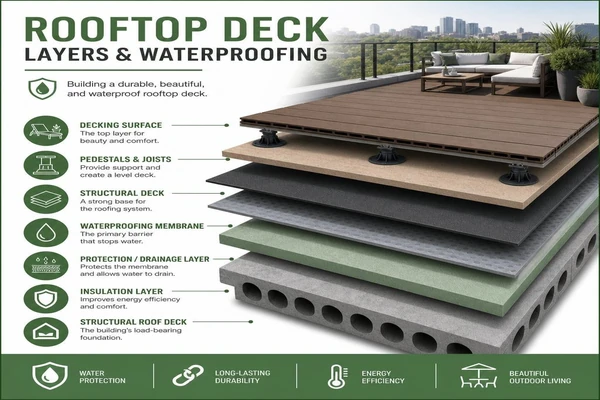
The primary function of any roof over a living space is to keep water out. For a rooftop deck, this becomes even more critical, as a failure can lead to extensive water damage, mold growth, and costly structural repairs below. Therefore, a continuous, highly durable waterproof membrane is absolutely essential. This is where the deck differs fundamentally from a ground-level patio; it must be 100% waterproof, not just water-resistant.
Several membrane options are recommended for rooftop deck applications:
- EPDM (Ethylene Propylene Diene Monomer) Membrane: A synthetic rubber membrane known for its exceptional durability and longevity. Properly installed EPDM membranes can last 25-50 years and reliably perform for decades.
- TPO (Thermoplastic Polyolefin) Membrane: A single-ply membrane that offers excellent resistance to UV radiation, punctures, and chemicals. TPO is typically white, which helps reflect sunlight and reduce heat absorption.
- PVC (Polyvinyl Chloride) Membrane: Similar to TPO, PVC membranes are durable, flexible, and often come in various colors. Products like Valordek vinyl deck membrane explicitly designed for rooftop decks offer a 15-year waterproofing warranty plus a 5-year appearance warranty, highlighting their suitability for these demanding environments. PVC membranes can also be heat-welded to PVC flashing, creating a continuous, impervious seal at edges and transitions. The “Waterproofing A Rooftop Deck” article provides excellent insights into PVC membrane installation.
Crucial to effective waterproofing is a properly designed drainage system. The roof surface beneath the deck must have a minimum 2% slope (1/4 inch per foot) to ensure water flows efficiently towards scuppers or drains, preventing pooling. The deck structure itself should be “floating,” meaning no fasteners penetrate the waterproof membrane. Instead, deck supports (sleepers or pedestals) rest on protective rubber pads or directly on the membrane, allowing water to drain freely underneath. Slip sheets or protective mats are often used between the membrane and the deck system to prevent abrasion and distribute weight, as discussed in “Q&A – Rooftop deck build” from AskARoofer.
Comparing Pedestal Pavers, Vinyl Membranes, and Sleepers
Choosing the right walking surface for your rooftop deck involves balancing aesthetics, durability, maintenance, cost, and fire-rating requirements. Here’s a comparison of popular options:
- Pedestal Paver Systems: These systems utilize adjustable pedestals to support pavers (concrete, porcelain, stone, or even wood tiles) above the waterproof membrane.
- Pros: Excellent drainage, easy access to the membrane for inspection or repair, highly durable and often non-combustible pavers, superior aesthetics, and the ability to create a perfectly level surface on a sloped roof. Pedestal pavers are an ideal choice for a sophisticated rooftop patio.
- Cons: Higher initial cost, significant weight (requiring substantial structural capacity).
- Cost: Rooftop deck construction costs for pedestal paver systems typically range from $20-$40 per square foot.
- For more information on these systems, consider “Your Rooftop Patio Needs a Paver Pedestal System” and “A Contractor’s Guide to the Benefits of Using a Pedestal System.”
- Vinyl Deck Membrane Systems: These systems combine the waterproofing layer and the walking surface into a single, heat-welded membrane.
- Pros: Cost-effective, excellent waterproofing (often with long warranties), typically fire-rated (Class A or C), low maintenance, and available in various colors and patterns. Valordek’s “Vinyl Decking for Rooftop Decks” highlights these benefits.
- Cons: Aesthetics may be less varied than pavers, can feel hot underfoot in direct sun, requires professional, certified installation.
- Cost: Vinyl membrane systems are often the most cost-effective, ranging from $8-$15 per square foot installed.
- Wood or Composite Decking on Sleepers: This involves building a traditional deck frame or using sleepers (joists) directly on the waterproof membrane, then installing wood or composite deck boards.
- Pros: Familiar aesthetics, wide range of material choices (e.g., Ipe deck tiles, composite decking).
- Cons: Sleepers can trap moisture, accelerating membrane wear at contact points. They also create less ventilation, potentially leading to mold or mildew. Many composite decking options are “not ideal” for rooftops due to excessive heat absorption and expansion/contraction issues, as noted by French’s Custom Concepts. Softwoods are generally unsuitable due to warping and high maintenance. Higher maintenance for wood.
- Cost: Wood or composite systems on sleepers, including the underlying membrane, can range from $15-$40 per square foot.
Here’s a simplified comparison table of these popular rooftop deck materials:
Material Type Initial Cost (per sq ft installed) Waterproofing Fire Rating (typically) Aesthetics Maintenance Key Advantage Vinyl Membrane $8 – $15 Integrated Class A/C Solid colors/patterns Low Waterproofing & walking surface in one Pedestal Pavers $20 – $40 Separate Class A/C Premium, versatile Low Longevity, access to membrane, drainage Wood/Composite $15 – $40 Separate Varies Natural/traditional Moderate to High Familiar look, wide material choice When considering any exterior decking solution, especially for a rooftop, consult with professionals who understand the unique challenges and requirements. For more options and guidance on selecting the best system for your project, exploring resources like Skydeck exterior decking can provide valuable insights into various paver and tile solutions.
Frequently Asked Questions About Rooftop Decks
Homeowners and property managers often have many questions when contemplating a rooftop deck. Addressing these common concerns is essential for a successful project, avoiding typical mistakes, and ensuring long-term satisfaction.
What is the difference between structural roof decking and a rooftop walking deck?
This is a fundamental distinction. Structural roof decking (or sheathing) is the essential, load-bearing layer of material, typically plywood, OSB, or metal, that forms the roof’s structural integrity. It’s the base that supports the roofing materials and transfers loads to the building’s frame. It is not designed to be walked on directly.
A rooftop walking deck, conversely, is a separate, additional structure built on top of a finished, waterproofed roof. Its purpose is to create a usable, habitable outdoor living space. It requires its own set of materials for the walking surface, often installed over a specialized support system, and is entirely dependent on the underlying structural roof decking and waterproofing for its foundation. The key is that the walking deck is a functional amenity, while the structural decking is a core component of the building’s envelope.
How much weight can a standard roof support versus a rooftop deck?
The load-bearing capacity is one of the most critical differences. A standard residential roof is generally designed to support a live load of 20-30 pounds per square foot (psf). This capacity is sufficient for typical environmental loads like snow and wind, plus the weight of roofing materials.
However, a rooftop deck, which will accommodate people, furniture, planters, and potentially hot tubs or other amenities, requires a significantly higher load capacity. Building codes typically mandate a minimum live load capacity of 55 psf for habitable deck spaces. This means that in most cases, a structural engineer’s assessment is not merely recommended but absolutely necessary. The engineer will determine if the existing roof structure needs reinforcement to safely support the increased dead load (weight of the deck materials) and live load (weight of occupants and items). Failing to meet these requirements can lead to structural compromise and is a common, costly mistake.
How do you prevent leaks when building a deck on a roof?
Preventing leaks is the paramount concern for any rooftop deck project, as water infiltration into the living space below can cause extensive damage. The most effective strategy centers around a “floating deck” design combined with a robust, continuous waterproof membrane.
Here are the key principles:
- Continuous Waterproof Membrane: Before any deck structure is installed, the underlying roof must be fully waterproofed with a high-quality membrane (EPDM, TPO, or PVC). This membrane must be seamlessly installed, ideally with heat-welded seams, and extend up walls or parapets to create a bathtub-like seal.
- Zero Penetrations: Crucially, the deck structure itself should never penetrate the waterproof membrane. This means no screws, nails, or bolts should go through the membrane into the roof deck below.
- Floating Structure with Rubber Pads: Deck supports, whether they are wood sleepers or adjustable pedestals, should rest on the waterproof membrane. These supports are typically placed on protective rubber pads or shims. These pads serve multiple purposes: they protect the membrane from abrasion, distribute the weight evenly, and allow water to flow freely underneath the deck structure.
- Proper Drainage Slope: The underlying roof membrane must be sloped (minimum 2%) towards drains or scuppers to ensure water sheds efficiently and never pools beneath the deck. The deck system itself should be designed to allow water to drain through or off its surface, maintaining the integrity of the primary waterproofing layer.
Common mistakes include puncturing the membrane during installation, inadequate slope leading to standing water, or using materials that trap moisture and accelerate membrane degradation. Adhering to these principles, along with professional installation, is essential to ensure a leak-free rooftop deck.
Conclusion
In June 2026, the pursuit of enhanced building exteriors is more dynamic and rewarding than ever. From the street-level impact of a thoughtfully chosen garage door to the transformative potential of a rooftop deck, every element contributes to a property’s overall appeal, functionality, and value. Investing in these exterior renovations isn’t just about aesthetics; it’s about maximizing usable space, improving energy efficiency, and securing a strong long-term return on investment.
Rooftop decks, in particular, offer an unparalleled opportunity to extend living spaces, capture stunning views, and create unique outdoor environments. However, their successful execution hinges on a deep understanding of structural requirements, meticulous waterproofing, and informed material selection. By prioritizing professional structural assessments, implementing robust membrane systems, and choosing appropriate walking surfaces like pedestal pavers or vinyl membranes, homeowners and property managers can confidently transform their underutilized rooftops into vibrant, valuable assets.
We encourage you to explore the possibilities for your property. With careful planning and the right expertise, your exterior spaces can become powerful extensions of your home or business, truly embodying modern living.
Ready to elevate your outdoor spaces? Learn more about innovative pedestal paver systems and other solutions for your next project.
Discover Pedestal Paver Systems for Your Rooftop Deck Today!
