

Maximizing Efficiency with Commercial and Residential HVAC SystemsIntroduction to Smarter Heating and Cooling Decisions
We all want comfortable indoor spaces, whether it’s our home or our business. But keeping these spaces cool in the summer and warm in the winter can lead to high energy bills. Choosing the right heating and cooling system is a big decision that impacts both your comfort and your wallet. This is why understanding the differences in a central AC vs ductless mini split comparison is so important. As we look to May 2026, finding the most efficient solution for your property’s specific needs has never been more critical.
This guide will help you understand the main differences between central air conditioning (AC) and ductless mini-split systems. We will look at how each system works, their advantages, and their disadvantages. Our goal is to help you decide which HVAC solution is best for your property and your needs.
Why efficiency matters in both homes and light commercial spaces
Energy efficiency is paramount, whether we are managing a bustling commercial property or a cozy family home. High energy consumption translates directly into higher operating costs, impacting budgets for businesses and households alike. Beyond the financial aspect, efficient systems contribute to consistent indoor comfort, eliminating hot and cold spots that can disrupt productivity in an office or relaxation at home.
Investing in efficient HVAC also improves the lifecycle performance of equipment, reducing wear and tear and extending the system’s lifespan. Proper airflow and ventilation are critical for maintaining healthy indoor air quality, preventing the buildup of pollutants and allergens. Optimizing energy use is a win-win, leading to lower utility bills, enhanced occupant comfort, and a more sustainable operation.
The two most common cooling approaches: central AC and ductless mini-splits
When considering cooling solutions, two primary systems dominate the market: central AC and ductless mini-splits. Central AC systems rely on a network of ductwork to distribute cooled air throughout an entire building, aiming for uniform temperatures. Mini-splits, on the other hand, operate without extensive ductwork, offering zoned control through individual indoor units.
Both systems utilize refrigerant to transfer heat, but their approach to air distribution and temperature management differs significantly. Mini-splits often incorporate inverter technology, allowing for variable-speed operation and enhanced efficiency, particularly when only certain areas require cooling. Understanding these fundamental differences is key to selecting the ideal system for whole-building cooling or targeted comfort.
Commercial HVAC and Residential Systems: What Changes and What Stays the Same
While the core principles of heating, ventilation, and air conditioning remain consistent, commercial and residential HVAC systems are designed with distinct considerations. Residential systems typically prioritize quiet operation, aesthetic integration, and individual room control, catering to the varied schedules and comfort preferences of a family. Commercial systems, by contrast, are engineered for larger building sizes, more substantial load calculations, and diverse occupancy patterns.
However, many aspects remain similar. Both require a strategic thermostat strategy for optimal energy management, meticulous maintenance planning for longevity, and robust ventilation needs to ensure healthy indoor air quality. Equipment sizing is critical for both, guaranteeing that the system can effectively meet cooling and heating demands without overworking or underperforming.
How Commercial HVAC systems are designed for larger, more variable loads
Commercial HVAC systems are robustly designed to handle the unique challenges of larger, often more complex, environments. Unlike residential units, these systems frequently feature rooftop units or larger split systems capable of managing significant cooling and heating loads across expansive spaces. They incorporate advanced zoning demands to accommodate diverse areas such as common areas, individual office suites, and retail spaces, each with different temperature requirements and occupancy schedules. This flexibility is crucial for adapting to variable loads throughout the day, including after-hours usage, ensuring comfort while optimizing energy consumption.
How residential HVAC systems prioritize comfort, quiet operation, and room-by-room needs
Residential HVAC systems are tailored to create a sanctuary of comfort within the home. The design often focuses on integrating seamlessly with the home layout, considering factors like family schedules and individual preferences. For homes with additions or older homes where ductwork may be impractical, residential systems offer flexible solutions. Quiet operation is a high priority, ensuring that cooling and heating do not disrupt daily life or sleep. Aesthetics also play a role, with homeowners often preferring systems that are discreet or blend into the decor. Modern residential systems increasingly incorporate smart controls, allowing homeowners to manage temperatures with precision and convenience, often on a room-by-room basis.
Central AC vs Ductless Mini-Split Comparison: The Core Differences
Choosing between central AC and a ductless mini-split system involves understanding their fundamental operational differences. Each system offers distinct advantages depending on the property’s structure, existing infrastructure, and comfort priorities.
How central AC works in ducted properties
Central AC systems are the traditional choice for whole-home cooling in properties with existing ductwork. The process begins with an outdoor unit, the condenser, which works in conjunction with an indoor evaporator coil and air handler. Refrigerant lines connect these components, circulating coolant to absorb heat from the indoor air. The air handler then blows the cooled air through a network of supply vents into various rooms. Simultaneously, return vents draw warmer air back to the air handler to be re-cooled, creating a continuous cycle of whole-home cooling. Typically, a single thermostat controls the temperature across the entire property, aiming for a uniform climate.
How ductless mini-splits work without ductwork

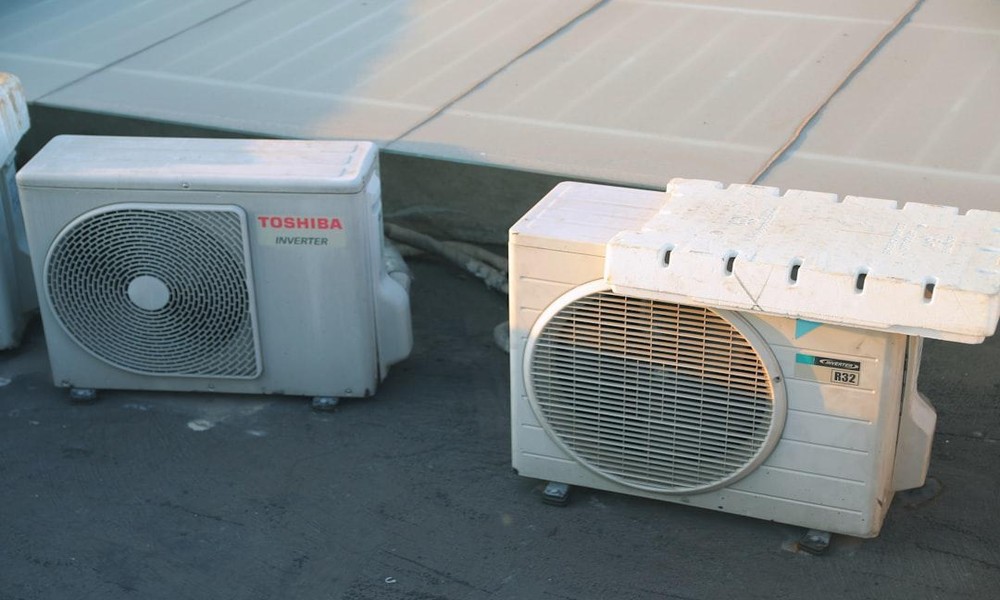
Ductless mini-splits offer a flexible alternative, operating effectively without the need for extensive ductwork. These systems consist of one or more indoor heads, usually mounted on a wall, ceiling, or floor, connected to a single outdoor unit via a small conduit. The conduit houses the power cable, refrigerant lines, and condensate drain. Each indoor unit contains its own evaporator coil and fan, allowing for independent room control. Modern mini-splits often feature a variable-speed compressor in the outdoor unit, which can precisely adjust its output to match the cooling demand of each zone. This targeted approach efficiently transfers heat from individual rooms to the outside, providing personalized comfort.
The main difference between central AC and ductless mini-splits
The primary distinction between central AC and ductless mini-splits lies in their air distribution and zoning capabilities. Central AC treats the entire property as one zone, distributing air through ducts from a single indoor unit. This means a single thermostat dictates the temperature for the whole house, often leading to uneven cooling or heating in different areas.
Ductless mini-splits, conversely, offer multi-zone control. Each indoor unit can be set to a different temperature, allowing occupants to customize comfort in individual rooms or areas. This eliminates the energy waste associated with cooling unoccupied spaces. Another significant difference is the presence of ductwork; central AC relies on it, which can lead to duct losses, while mini-splits bypass this issue entirely. This also grants mini-splits greater install flexibility, making them ideal for older homes without existing ducts or for new additions.
Commercial HVAC Efficiency Lessons Homeowners Can Use
Homeowners can learn valuable lessons from commercial HVAC strategies, particularly concerning efficiency. Implementing a smart zoning strategy, similar to how businesses manage different office suites or retail areas, can significantly reduce energy waste by only conditioning occupied spaces. The concept of part-load efficiency, often achieved through inverter performance in modern systems, allows units to run at reduced capacity when full power isn’t needed, saving energy.
Setting up setback schedules for thermostats, much like commercial buildings do after hours, can also lead to substantial savings. Furthermore, regular preventive maintenance, airflow balancing, and the use of smart controls are practices that benefit both large commercial properties and individual residences. For a deeper dive into how these considerations impact your comfort and wallet, you might find this Ares Commercial HVAC comparison particularly insightful.
Which system is typically more energy efficient and why
Ductless mini-splits generally hold an edge in energy efficiency compared to traditional central AC systems, primarily due to the absence of ductwork. Central AC systems can experience significant duct losses, with studies indicating that up to 30% of conditioned air can escape through leaky or uninsulated ducts. This means a considerable portion of the energy used to cool or heat air is simply wasted before it even reaches the living space.
While central AC systems typically have SEER (Seasonal Energy Efficiency Ratio) ratings ranging from 14-18, many ductless mini-splits boast SEER ratings as high as 30+. This superior efficiency is also attributed to their inverter compressors, which allow the system to operate at variable speeds, precisely matching the cooling demand rather than constantly cycling on and off. This targeted conditioning, combined with eliminating duct-related energy waste, makes mini-splits a highly efficient choice.
How zoning and temperature control affect real-world performance
The ability to control temperatures in independent zones dramatically impacts a system’s real-world performance and energy consumption. Central AC, with its single thermostat, often struggles to maintain uniform comfort throughout a property, leading to hot spots in sunny rooms or upstairs bedrooms, and cold spots in shaded areas or basements. This forces homeowners to overcool or overheat certain areas just to make others comfortable, wasting energy.
Ductless mini-splits, by contrast, offer precise, independent temperature control for each indoor unit. This means you can cool only the occupied spaces, like an office suite during work hours or an upstairs bedroom at night, while reducing conditioning in unused rooms. This targeted approach not only enhances comfort but also significantly reduces energy consumption, mirroring the efficiency strategies seen in commercial settings where different areas have distinct needs.
Can one system handle both heating and cooling?
Yes, both central AC systems and ductless mini-splits can provide both heating and cooling, particularly when equipped with heat pump technology. A heat pump works by simply reversing its cycle: in cooling mode, it extracts heat from indoors and expels it outside, while in heating mode, it extracts heat from the outdoor air (even in cold temperatures) and transfers it indoors.
This dual-purpose system offers year-round comfort from a single unit. Modern heat pumps are highly efficient, especially in mild climates, and can often serve as the sole heating and cooling source. In very cold climates, some heat pumps may require supplemental heat from an electric resistance heater or a traditional furnace to maintain desired temperatures, but their primary function covers both cooling and heating needs efficiently.
Pros, Cons, and Best-Fit Scenarios for Different Properties
Deciding between central AC and ductless mini-splits often comes down to the specific characteristics of your property, including whether you have existing ductwork, the property’s age, and your comfort priorities. Each system has unique advantages and disadvantages that make it a better fit for certain scenarios, from historic homes and new home additions to large, open-layout spaces or mixed-use areas.
Key pros and cons of central AC
Central AC systems are a popular choice for many properties, offering several distinct advantages. They provide whole-home coverage, distributing cooled air uniformly through a network of ducts, which many find ideal for an even airflow experience. Aesthetically, central AC is often preferred because only vents are visible, keeping the cooling equipment out of sight. These systems also typically integrate stronger filtration capabilities, contributing to better indoor air quality. If a property already has existing ducts, central AC can be a cost-effective solution for comprehensive cooling.
However, central AC also comes with drawbacks. Its reliance on ductwork means potential for duct leakage, which can significantly reduce efficiency and lead to higher energy bills. They offer limited native zoning capabilities, often treating the entire property as one zone, which can lead to energy waste in unoccupied rooms. Retrofitting central AC into properties without existing ductwork can be a more invasive and costly process.
Key pros and cons of ductless mini-splits
Ductless mini-splits have gained immense popularity for their high efficiency and flexible installation. Their key advantages include superior energy efficiency, often attributed to inverter technology and the elimination of duct losses. This translates to significant savings on operating costs. Mini-splits also offer zoned comfort, allowing individual control over temperatures in different rooms or areas, which is ideal for varying preferences or schedules. They are known for their quiet operation, with indoor units often running at levels as low as 19-26 dB, quieter than a whisper. Their flexible placement options mean they can be installed almost anywhere, making them perfect for properties without existing ductwork.
On the downside, the indoor units are visible, which some homeowners may find less aesthetically pleasing than discreet central AC vents. Each indoor unit requires regular filter cleaning (every 14-45 days), a more frequent task than central AC filters.
Here are some ideal use cases for mini-splits:
- Home additions: Easily cool a new room without extending existing ductwork.
- Older homes: Provide AC without the invasive and costly installation of new ducts.
- Finished basements or attics: Condition these spaces independently.
- Garages or workshops: Create comfortable working environments.
- Targeted cooling for specific rooms: Address hot spots or provide personalized comfort.
Which system fits homes with ducts, homes without ducts, and hybrid layouts
The ideal HVAC system largely depends on the property’s existing infrastructure. For homes with existing ductwork that is in good condition, central AC often presents the most straightforward and cost-effective solution for whole-home cooling.
However, for older homes, slab homes, or properties without any existing ductwork, ductless mini-splits are a superior choice. They bypass the need for expensive and disruptive duct installation, which can add up to $18,000 to the cost of a central AC system.
Many properties also benefit from a hybrid system, combining both technologies. For instance, central AC can manage the main living areas, while mini-splits are installed in additions, garages, attics, or other problem rooms that are hard to cool or heat with the central system. This approach offers the best of both worlds: comprehensive coverage for the core of the property and precise, efficient zoning for specific areas.
Maintenance, Lifespan, Noise, Air Quality, and Final Decision Factors
Beyond initial installation, several long-term factors influence the choice between central AC and ductless mini-splits. These include the ongoing maintenance required, the expected lifespan of the equipment, noise levels during operation, and the impact on indoor air quality. Understanding these elements is crucial for making a well-rounded decision that aligns with your comfort preferences and operational expectations.
Ongoing maintenance and operating considerations for each system
Both central AC and ductless mini-splits require regular maintenance to ensure optimal performance and longevity. For mini-splits, homeowners should clean the filters in each indoor unit frequently, typically every 14-45 days, depending on usage. Central AC filters, by contrast, usually need replacement every 30-90 days.
Annual professional service is recommended for both systems, which includes checks of refrigerant levels, electrical connections, and overall system function. Ensuring outdoor units have clear clearance, free from debris, is vital for efficient operation. For central AC, periodic duct cleaning and sealing are also important to prevent airflow issues and maintain efficiency, as leaky ducts can reduce efficiency by as much as 30%.
Noise, aesthetics, and indoor air quality differences
Noise levels and aesthetics are significant considerations for occupant comfort. Ductless mini-splits are renowned for their quiet operation, with indoor units often producing as little as 19-26 dB, which is quieter than a whisper. While the indoor units are visible wall-mounted or ceiling-mounted components, their sleek designs are increasingly integrated into modern interiors. Central AC systems, with their vent-only appearance, offer a more discreet aesthetic, keeping the bulk of the equipment out of sight. However, the air handler unit can produce noticeable noise.
Regarding indoor air quality, central AC systems often have an advantage due to their ability to integrate larger, more robust media filters and air purification systems within the ductwork, effectively controlling allergens and pollutants throughout the entire property. While mini-splits have filters, they are typically smaller and less comprehensive for whole-property air purification. The cleanliness of ducts in a central system also directly impacts the quality of the air distributed.
How to decide which HVAC setup is right for your property
Choosing the right HVAC setup for your property involves a careful assessment of several factors. Consider your property’s layout and occupancy patterns: do you need whole-property cooling, or would zoned control be more beneficial for specific areas? The condition of any existing ductwork is paramount; if it’s old or leaky, a ductless system might be more efficient.
Your comfort priorities, including desired temperature precision and noise levels, should also guide your decision. Factor in your heating needs, as many mini-splits offer efficient heat pump functionality. Finally, think about resale preferences and whether a visible indoor unit or a traditional ducted system aligns better with potential buyers’ expectations. Often, a professional assessment can help you navigate these choices and even explore a hybrid option for optimal comfort and efficiency.
Frequently Asked Questions About Commercial HVAC and Home Cooling Choices
When homeowners and business owners are evaluating their heating and cooling options, several common questions arise. These questions often revolve around practical use cases, comfort planning, and the overall effectiveness of each system in various scenarios.
Is central AC or ductless mini-split better for a building with existing ductwork?
If your building already has existing ductwork that is in good condition and properly sealed, central AC is generally the more straightforward and often more cost-effective option for whole-home cooling. The infrastructure is already in place, reducing installation costs significantly compared to installing new ductwork. However, if the existing ductwork is old, leaky, or poorly designed, a ductless mini-split system could offer superior efficiency and comfort by avoiding those inherent duct losses. The decision hinges on the quality and practicality of your current ducted system.
Can a ductless mini-split cool or heat an entire property?
Yes, a multi-zone ductless mini-split system can effectively cool or heat an entire property. These systems connect a single outdoor unit to multiple indoor units, each placed in a different room or zone. This allows for individual temperature control in various parts of the property, providing comprehensive comfort without the need for ductwork. The number of zones a system can support depends on the outdoor unit’s capacity and the property’s total cooling and heating load. Many modern mini-splits also function as heat pumps, providing efficient heating capabilities for year-round comfort.
Is it possible to use central AC and ductless mini-splits together?
Absolutely. Many homeowners opt for a hybrid HVAC approach, combining central AC with ductless mini-splits to maximize comfort and efficiency. This setup is particularly beneficial for additions, converted spaces like finished basements or attics, or hard-to-cool rooms that the central system struggles to reach effectively. For example, central AC can handle the main living areas, while a mini-split can provide targeted cooling or heating to a sunroom, a home office, or a bedroom that consistently runs warmer or colder than the rest of the property. This flexibility allows for optimized comfort and energy savings across the entire home.
Conclusion
Making an informed HVAC choice is crucial for ensuring long-term comfort and managing energy costs for any property. Whether your priority is maximizing efficiency, achieving precise zoning needs, or simply finding the right fit for your building type and existing infrastructure, understanding the nuances between central AC and ductless mini-split systems is key. Consider your maintenance habits, aesthetic preferences, and the specific demands of your space. By carefully evaluating these factors and consulting with HVAC professionals, you can confidently select a system that provides optimal comfort and efficiency for years to come.
